
TL;DR
A closet can be a surprisingly good space for recording or hosting a rig if you focus on controlling reflections and placing absorption thoughtfully. Proper ventilation is key for heat and noise management. Think of it as a mini studio that’s both quiet and cool.
Ever wondered if you can turn a closet into a decent recording booth or a quiet home for your AI rig? The answer is yes, but only if you understand how sound behaves in small spaces and how to control it effectively.
This guide cuts through the noise—literally—to show you how to dampen reflections, position equipment, and ventilate properly. It’s about making your closet work for you, not against you. You might find this guide on acoustic dampening helpful.
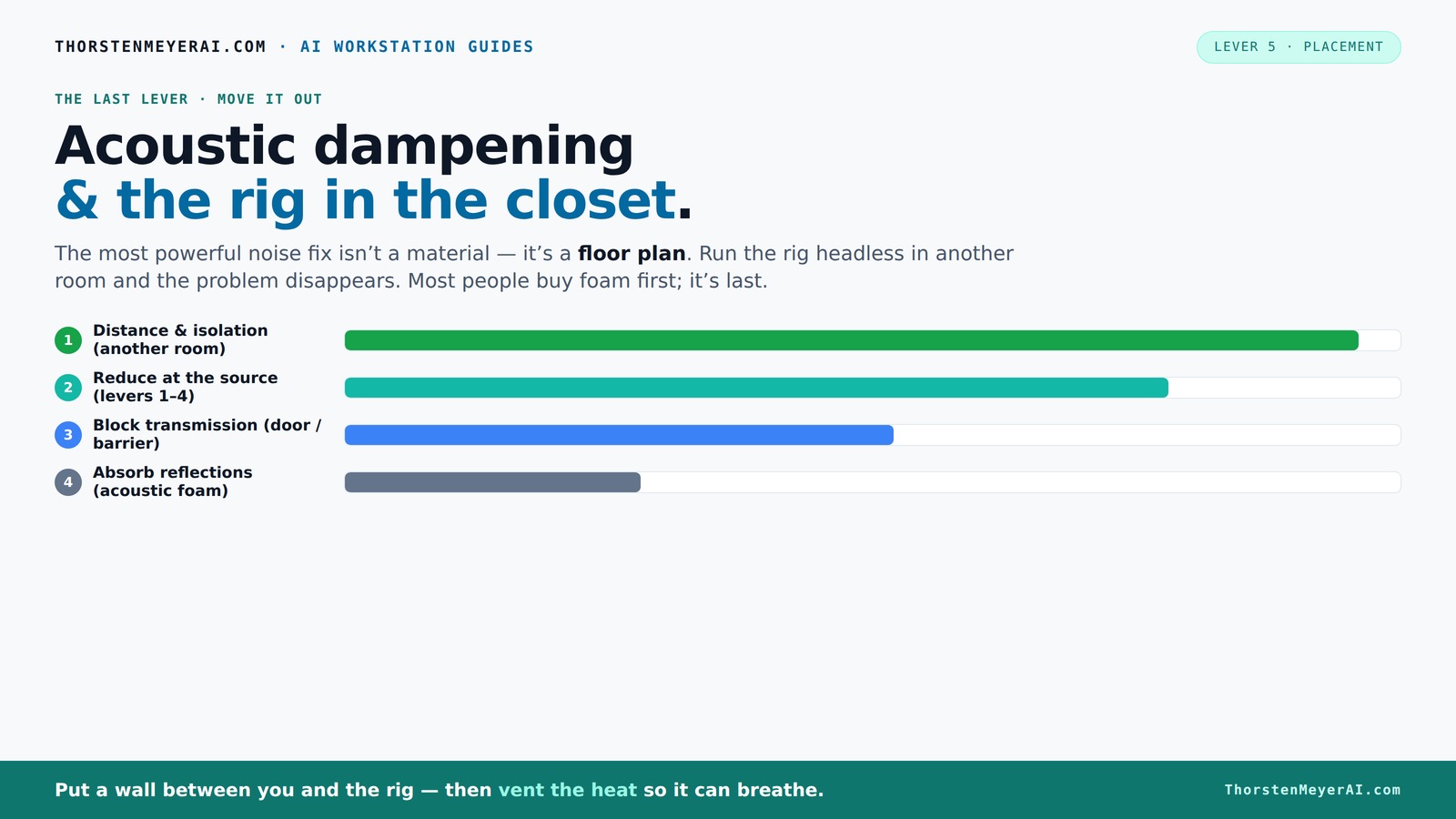
Acoustic dampening
& the rig in the closet.
The most powerful noise fix isn’t a material — it’s a floor plan. A rig you can’t hear because it’s in another room beats any amount of foam. Tap the approaches in Part 1 to see what actually works.
(another room)
(levers 1–4)
(door / barrier)
(acoustic foam)
Contain the noise, not the heat
Key Takeaways
- Focus on reflection points—walls behind you, ceiling, and near the mic—before adding foam or panels.
- Seal gaps around the door and treat the door itself for effective sound control.
- Proper ventilation in a closet rig is mandatory to prevent overheating and maintain quiet operation.
- Place your mic close to your mouth, aimed away from reflective surfaces, with a pop filter for clarity.
- Use everyday materials like blankets, rugs, and clothing for a budget-friendly boost in acoustics.

48 Stück Akustikschaumstoff Schallschutzplatten, 2.5 X 30 X 30CM Schalldämmung Akustikpaneele, Schallschutz Akustik Schaumstoffplatten, Hochdichte Schalldämmung Akustikplatten für Tonstudio, Heimkino
[Hervorragende Schalldämmung mit Akustikpaneele] - Unsere 2,5 cm dicken Akustikpaneele aus fortschrittlichem Akustikschaumstoff (25 kg/m³) bieten eine herausragende...
As an affiliate, we earn on qualifying purchases.
As an affiliate, we earn on qualifying purchases.
Acoustic Dampening Basics: Why Reflection Control Matters More Than Foam
Acoustic dampening isn’t just about slapping foam on the walls. It’s about controlling how sound bounces around your tiny space. Small rooms—like closets—can turn into echo chambers if you don’t treat the right surfaces. For more tips, see this acoustic treatment guide.
The first step? focus on the biggest reflection points: the wall behind you, the ceiling above, and the side walls near your microphone. Use thick blankets, acoustic panels, or even clothing to absorb these reflections. Remember, foam absorbs echo but doesn’t stop sound from escaping or entering. That’s the barrier’s job.
Understanding why reflection control is more effective than just buying foam is crucial. Foam panels primarily absorb high frequencies, which are responsible for sibilance and sharpness, but they don’t address low-frequency buildup or sound leakage. Small rooms naturally amplify certain frequencies, creating a boxy, unnatural sound. Properly treating reflection points reduces this boxiness, resulting in clearer, more natural recordings. The tradeoff? Over-treating can deaden your sound too much if not balanced, so focus treatments on the most problematic reflection points rather than covering every surface. Learn more about acoustic treatment at this site about acoustic setup.
For example, hanging a thick blanket behind your mic reduces the boxiness and keeps your voice focused. Adding a rug on the floor helps tame those floor reflections that can muddy your recordings.

Snap Studio Vocal Booth – #1 empfohlene Studio-Soundkabine für die Aufnahme trockener, echofreier Gesang – 80% Reverb Reduktion & 360° Isolation – Cliphalterung, Lichter und Reisetasche im
#1 Empfohlene Tragbare Vocal Booth – In Rolling Stone Magazine als „beste tragbare Vocal Booth“ vorgestellt, ist Snap...
As an affiliate, we earn on qualifying purchases.
As an affiliate, we earn on qualifying purchases.
Where to Place Absorption and Diffusion in a Closet Booth
Placing your acoustic treatment strategically makes all the difference. Your goal is to target the first reflection points—the spots where sound bounces directly into the mic.
Start with the wall behind your head and the ceiling above the mic. Use a mirror trick: position a mirror along the wall, and when you see your mic in the mirror, that’s where you need absorption. This method helps you identify the exact points where sound reflects most prominently, which are often overlooked but crucial for sound clarity.
In a tiny closet, covering more surfaces often yields better results. Think of it as a near-total blanket—covering walls, ceiling, and even the door if needed. However, be mindful of overdoing it, as excessive absorption can deaden your sound, making it sound unnatural or overly dry. The goal is a balanced acoustic environment that reduces echo without sacrificing liveliness.
For instance, a DIY setup might include foam panels on the side walls, a hanging blanket on the door, and a foam panel or rug on the floor to reduce low-frequency buildup. The placement should be based on listening tests and reflection point identification to optimize clarity and warmth in your recordings.

Audio System Door KIT 2.0 Dämm-Set: Schallisolierung für 2x Türen mit Neopren-Schaum, AluButyl und Silence Fleece Dämm-Vlies
As an affiliate, we earn on qualifying purchases.
As an affiliate, we earn on qualifying purchases.
The First Step: Seal and Treat the Door, Walls, and Floor
Treating a closet isn’t just about adding foam; sealing leaks and blocking sound leaks is crucial. Doors are the weakest point for sound escape and reflection. Seal gaps around the door with weatherstripping or draft stoppers. Hang a thick blanket or acoustic panel over it for extra absorption.
Walls usually have gaps or hard surfaces that reflect sound. Cover these with blankets or panels, especially near the microphone. The floor’s reflections can be tamed with a rug or carpet—especially in small spaces where sound bounces off the floor into the mic.
Sealing gaps around the door with weatherstripping can dramatically reduce sound leaks—up to 80% or more—making your treatment much more effective. This prevents unwanted noise from entering or escaping, which is especially important if you record in noisy environments. Covering reflective walls with blankets or panels minimizes early reflections that cause echo and muddiness. The floor, often overlooked, can reflect low frequencies and create a boomy sound if not treated. Placing a rug or carpet reduces these reflections, resulting in warmer, clearer recordings. For detailed advice, see this guide on acoustic treatment.

Abluftventilator Quiet V2 mit Hygrostat - nicht nur leise sondern still
Hocheffizienter Motor: Der Motor hat einen geringen Verbrauch von nur 7,5 W und ist auf Langlebigkeit ausgelegt. Er...
As an affiliate, we earn on qualifying purchases.
As an affiliate, we earn on qualifying purchases.
Ventilation and Heat: Making Your Closet a Safe Space for a Long-Run Rig
Putting a high-power rig in a closet sounds perfect—until it overheats. Trapped heat can cook your machine, throttling performance or damaging components. The key? ventilation.
Always provide airflow by installing passive vents or a quiet exhaust fan. Purpose-built soundproof cabinets combine foam lining with ducted airflow—these are worth the investment if you want silence and cooling. Without proper ventilation, heat accumulates rapidly, leading to thermal throttling or hardware failure, especially during long sessions. Proper airflow ensures your equipment maintains a safe operating temperature, extending its lifespan and ensuring consistent performance. Check out this cooling guide for more tips.
For example, a small exhaust fan can pull hot air out, replacing it with cooler air from outside. This keeps temperatures below 80°F (27°C)—crucial for 24/7 operation. An AIO cooler that vents heat outside the closet can also help manage temperature spikes. Neglecting ventilation not only risks hardware damage but can also introduce noise if fans run loudly to compensate for poor airflow. The tradeoff is balancing soundproofing with adequate cooling—sometimes requiring creative ducting or quiet fans. Check out this guide for more on cooling high-power rigs effectively.
Choosing the Right Mic and Placement for Small Spaces
In a tiny closet, your microphone choice and placement are just as critical as treatment. A good small-space mic like a cardioid condenser captures your voice clearly, reducing room noise. For more on microphone placement, see this microphone placement tips.
Point the mic toward your mouth, not the wall behind you. Use a pop filter or foam windscreen to cut plosives and sibilance. Keep the mic away from reflective surfaces—this prevents echo and boxiness.
For example, placing your mic near the front of a foam-covered panel reduces room reflections and captures a warm, focused vocal tone.
The key is to find a balance between proximity and isolation. Too close, and you risk muffling your voice; too far, and room reflections sneak in. Use directional microphones to focus on your voice and minimize ambient noise, which is especially important in small, untreated spaces. Proper placement and mic choice significantly improve sound quality, making your recordings sound more professional even in tight quarters.
Common Mistakes That Turn Your Closet Into a Sound Trap
Don’t overlook the basics—like sealing gaps or neglecting ventilation. Common mistakes include: treating only one surface, leaving gaps around the door, or placing the mic directly against reflective walls.
Another trap? Over-treating with thick foam and ignoring heat. It’s tempting to cover every surface, but without airflow, your rig will overheat fast. Over-treating can also deaden your sound excessively, making recordings sound unnaturally dull or echoey if absorption is not balanced. Ignoring ventilation or heat management can lead to equipment failure or reduced performance during long sessions. Always aim for a balanced approach—treat reflection points, seal leaks, and ensure proper airflow to maintain both acoustic quality and hardware safety.
For example, placing panels randomly without reflection point focus can create uneven sound—some spots dead, others echoey—compromising overall clarity and professionalism.
DIY Budget Tricks to Make Your Closet Sound Better
You don’t need to spend a fortune. Use what you have: blankets, pillows, clothing, rugs. Hang a thick blanket over the door, prop some cushions on the walls, and toss a rug on the floor.
For example, a thick comforter hung over the door and a few pillows on the floor can cut echo and reduce background noise. These simple DIY tricks can make a noticeable difference without draining your wallet. Keep in mind that while these tricks improve acoustics, they also help with heat management by adding insulation and reducing airflow around hot components. Additionally, using low-noise fans or passive cooling methods complements these treatments, ensuring your setup remains both quiet and cool without significant investment.
Plus, adding a small fan or choosing low-noise equipment keeps your rig cool and quiet without costly modifications.
Frequently Asked Questions
Does a closet actually sound good for recording vocals?
Yes, a closet can sound surprisingly good because its small size reduces echo and reverberation. But it’s essential to treat reflection points and seal gaps to prevent boxiness and unwanted noise.
Is acoustic dampening the same as soundproofing?
No. Acoustic dampening reduces echoes and reflections inside a space, while soundproofing blocks sound from escaping or entering. For a closet, sealing gaps and adding barriers are key for soundproofing, while foam helps with dampening.
Where should I put acoustic panels in a closet booth?
Target the first reflection points: the wall behind you, the ceiling above the mic, and the side walls near your mic. Use a mirror trick or listen for the spots where sound bounces directly into the mic.
Do I need corner bass traps in a closet?
In small closets, low-frequency buildup can occur in corners. Adding bass traps or thick panels in corners helps control this, especially if you notice muffled or boomy sounds in recordings.
How thick should panels or blankets be?
For effective absorption, aim for panels or blankets at least 2 inches thick. Thicker materials better absorb low frequencies and reduce overall echo in tight spaces.
Conclusion
Turning a closet into a functional, quiet studio or AI rig space is about smart placement, targeted treatment, and good airflow. When you control reflections close to the mic and keep your machine cool, the space transforms from echo chamber to professional-sounding booth.
Remember: the best soundproofing isn’t just foam—it’s thoughtful design, sealing leaks, and making heat escape. Your closet can become the quiet powerhouse you need. Just plan it right.