
TL;DR
Bengaluru has deployed jet patching machines to repair potholes quickly and without blocking traffic lanes. This initiative aims to improve road safety and reduce traffic delays. The program is currently in the pilot phase with officials monitoring results.
Bengaluru has introduced jet patching technology to repair potholes efficiently while minimizing traffic disruptions. The initiative, launched by city authorities, aims to address the persistent issue of road damage without causing congestion, which is a common challenge during traditional patching methods. This development is significant for commuters and city planners seeking sustainable solutions for urban infrastructure maintenance.
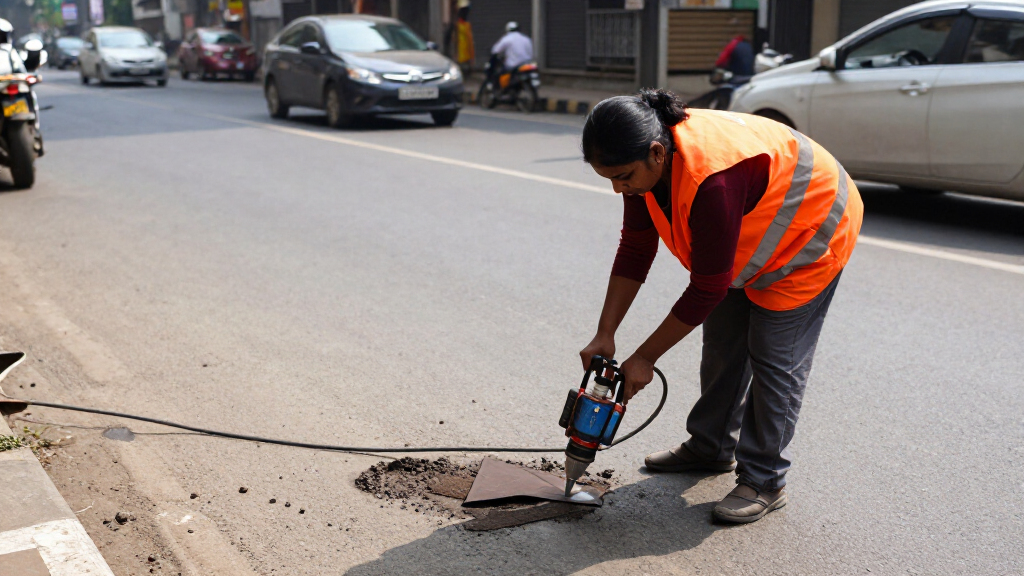
The city of Bengaluru has begun deploying jet patchers, specialized machines that use high-pressure jets to clean and fill potholes rapidly. According to officials, this method allows for quick repairs with minimal impact on traffic flow. The pilot program was announced last week and is currently being tested on several busy arterial roads. The jet patchers are designed to work during peak hours, reducing the need for lane closures or traffic diversions that typically accompany traditional patching operations.
Sources within the Bengaluru Municipal Corporation confirmed that the new technology aims to speed up repair times and improve the quality of pothole fixes. Unlike conventional methods, which often involve lane closures and lengthy roadworks, jet patchers can complete repairs in a matter of minutes, allowing traffic to continue smoothly. Officials stated that initial results are promising, with fewer traffic delays reported during maintenance activities.
Local residents and commuters have welcomed the initiative, citing the inconvenience caused by traditional patching. Traffic management authorities have indicated that if the pilot proves successful, the program could be expanded citywide. The cost-effectiveness and durability of repairs made by jet patchers are also under review, with ongoing assessments to determine long-term benefits.
Impact on Traffic Management and Road Maintenance Efficiency
This development is significant because it offers a more efficient and less disruptive method of repairing potholes, which are a major cause of accidents and vehicle damage in Bengaluru. By reducing repair times and traffic congestion, the city aims to enhance road safety, improve commute times, and reduce pollution caused by idling vehicles. If successful, this approach could serve as a model for other cities facing similar infrastructure challenges, especially during peak traffic hours.Traditional Pothole Repair Methods and Urban Traffic Challenges
In Bengaluru, potholes have long been a persistent problem, exacerbated during monsoon seasons and periods of heavy traffic. Conventional repair techniques typically involve lane closures, traffic diversions, and lengthy roadworks, which contribute to congestion and commuter frustration. The city has previously experimented with various maintenance methods, but none have fully addressed the dual challenge of timely repairs and traffic flow preservation. The recent introduction of jet patchers reflects a broader trend towards adopting innovative, technology-driven solutions for urban infrastructure management.
Interest in alternative repair methods has been rising, especially as traffic congestion worsens and the demand for sustainable urban mobility increases. The pilot deployment of jet patchers aligns with city officials’ goals to modernize maintenance practices and reduce the environmental impact of prolonged roadworks.
While the technology shows promise, it remains relatively new in the Indian context, and authorities are closely monitoring its effectiveness, durability of repairs, and overall impact on traffic flow.
Uncertainties About Long-Term Effectiveness and Expansion
It is not yet clear how durable the repairs made by jet patchers will be over time, especially in Bengaluru’s varied climate conditions. The long-term cost savings and maintenance requirements are still under evaluation. Additionally, it remains uncertain whether the pilot program will be scaled up to cover all major roads across the city, or if logistical challenges may limit broader deployment.
Officials have not provided specific timelines for full-scale adoption, and independent assessments are ongoing to verify the technology’s effectiveness compared to traditional methods.
Monitoring Results and Planning for Citywide Rollout
City officials will continue to monitor the performance of jet patchers over the coming months, focusing on repair durability, traffic flow, and cost-effectiveness. Based on the pilot outcomes, decisions regarding expansion to other parts of Bengaluru are expected within the next quarter. Further evaluations will include feedback from commuters, maintenance crews, and environmental impact assessments.
If results remain positive, authorities may allocate additional funding and resources to expand the program, potentially transforming how the city manages road repairs in the future.
Key Questions
How do jet patchers work compared to traditional pothole repair methods?
Jet patchers use high-pressure jets to clean and fill potholes quickly, reducing the need for lane closures and lengthy roadworks typical of traditional methods.
Are jet patchers more cost-effective than conventional repairs?
Initial assessments suggest they may be, due to faster repair times and less traffic disruption, but long-term cost-effectiveness is still under review.
Will this technology be used across all of Bengaluru?
Expansion depends on pilot results; officials are monitoring the program before deciding on citywide implementation.
What are the environmental impacts of using jet patchers?
Early indications show reduced emissions from less idling and shorter repair durations, but comprehensive environmental assessments are ongoing.
When can residents expect to see full-scale adoption?
A decision is expected within the next quarter, depending on pilot success and further evaluations.
Source: local