
TL;DR
A House Beautiful report describes new traditionalism as an evolution of classic interior design, not a replacement for it. Designers say the style retains traditional architecture and silhouettes while using stronger colors, mixed patterns and modern details to make rooms feel more personal and less formal.
New traditionalism is gaining attention as an interior design approach that pairs classic architecture and furniture with contemporary color, pattern and decor, according to a House Beautiful report featuring designers. The style matters to homeowners seeking rooms with historical character that feel more flexible and personal than formal traditional interiors.
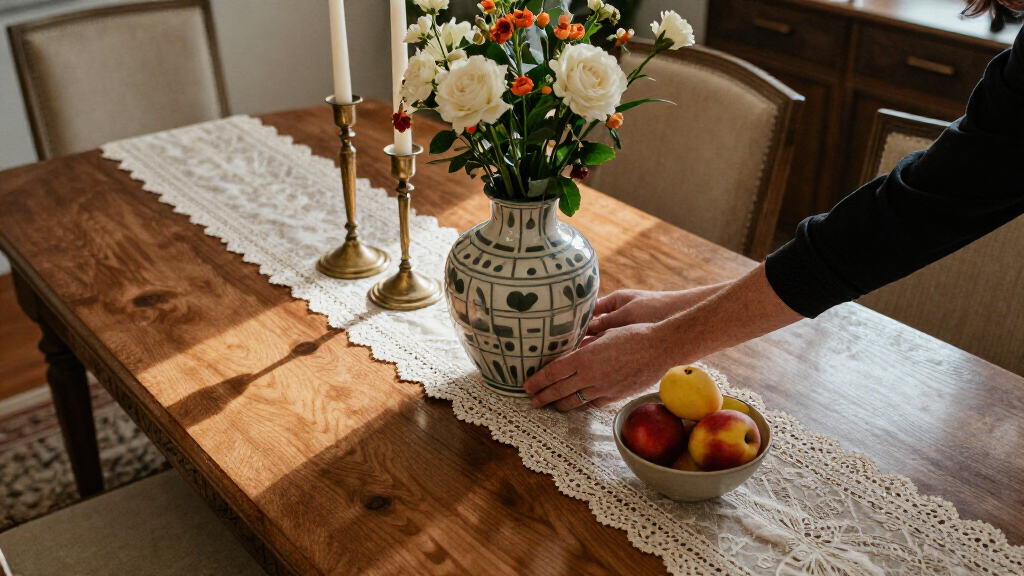
The designers quoted by House Beautiful describe the style as an evolution of traditional design, rather than a rejection of it. It retains elements such as proportion, craftsmanship, millwork and classic silhouettes, while loosening conventions associated with matched furniture, strict symmetry and restrained palettes. The result can include antique pieces alongside modern lighting or tailored upholstery.
Color and pattern are central to the approach. Charlotte Lucas told the magazine that designers might pair a modern geometric fabric with a traditional floral sofa. Other examples in the report include bold wallpapers, jewel-toned paint on moldings, stripes, animal prints and large florals. These choices are presented as ways to bring older forms into a contemporary home, not as a checklist every room must follow.
Designers also stress editing and balance. Corey Damen Jenkins described the style as expressive but controlled, while Brad Thornton said its goal is to balance historical weight with the sameness he associates with early social-media-era interiors. The report offers designers’ descriptions and examples, but does not provide survey data showing how widely the style is being adopted.
Classic Rooms, Looser Rules
The trend offers a response to interiors that some designers characterize as overly minimal or interchangeable. For homeowners, its appeal is the possibility of keeping architectural character and meaningful older pieces while making rooms more comfortable and visually individual. It can also accommodate practical changes: Thornton told House Beautiful that traditional rooms are sometimes perceived as formal spaces that are off-limits, particularly for families with children.
The approach does not require replacing an entire room or buying a coordinated set. Its emphasis on mixing eras can allow existing antiques, inherited furniture or historic details to sit alongside contemporary fabrics and fixtures. That makes the style relevant to people who want a home to feel collected rather than tied to a single period, though the report does not establish its cost or accessibility for different budgets.
There is a design challenge as well as an opportunity. Rich colors and layered prints can make a room feel distinctive, but too many competing elements may undermine the intended harmony. The designers’ advice is to use experimentation alongside restraint, rather than treating “more” as the defining feature.
Products Worth Considering

Akro-Mils 30235 AkroBins Plastic Storage Bins, Space-Saving Stackable Bins for Garage, Pantry, Craft Organization, 27,6 cm x 27,9 cm x 12,7 cm, Clear, Schwarz, 6er-Pack
MULTI-PURPOSE STORAGE BINS: These stackable storage bins hold up to 50 pounds and are great for closet organization,…

WOWBOX 25-teiliges transparentes Kunststoff-Schubladen-Organizer-Set, 4 Größen, Schreibtisch-Schubladen-Trenner, Organizer und Aufbewahrungsbehälter für Make-up, Schmuck, Badezimmer, Büro
Hochwertiges Material: Der Schubladen-Organizer ist aus ungiftigem Kunststoff, der sicher verwendet werden kann. Das transparente Design macht es…

Tiawudi Aufbewahrungsbehälter aus Kunststoff, transparent, vielseitig verwendbar, 12 Stück
Mehrzweck-Aufbewahrungsbehälter
As an affiliate, we earn on qualifying purchases.
A Shift From Minimal Interiors
House Beautiful places new traditionalism within a broader change in decorating preferences. The report says warmth and expressive interiors are gaining ground as millennial gray and ultraminimalism lose prominence, alongside interest in nostalgia, antiquing and traditional hobbies. These are the magazine’s framing observations, not quantified market findings.
Traditional design itself is not described as having disappeared. Thornton told the magazine that it never died, while arguing that years of open-plan layouts, plain walls and disposable furniture left some clients wanting more structure. In his account, new traditionalism keeps familiar forms—such as a roll-arm sofa—but updates details and styling to avoid a rigid, period-room effect.
The report’s examples show how that distinction can work: wall plates and architectural features remain traditional cues, while lively prints, less formal silhouettes or contemporary fixtures shift the room toward the newer style. The defining idea is a conversation between eras, rather than a faithful recreation of a historical interior.
“Design must continue to leap forward, and this is what happens when we respect the past but are willing to step outside our comfort zones.”
— Corey Damen Jenkins, designer, speaking to House Beautiful
How Broad Is the Trend?
The source does not quantify how many homeowners are adopting new traditionalism, how quickly interest is growing or whether it is influencing furniture and home sales. “Taking over” is the framing in the supplied headline; the report itself presents designers’ observations and selected interiors rather than industry-wide measurements. It is also unclear whether the style will persist as a lasting shift or remain a current design preference.
The term covers a broad range of choices, and the report does not set a formal standard for what qualifies. A room’s mix of antiques, color, pattern and modern furnishings may vary considerably by designer and homeowner.
How Designers Put It Into Practice
The report points to practical design choices rather than a single next milestone: retain useful architectural details and classic furniture forms, then introduce contemporary elements through paint, lighting, upholstery or wallpaper. Designers quoted by House Beautiful advise testing combinations while paying attention to the room’s overall balance.
No upcoming announcement, survey or industry data is identified in the source. Readers can expect the look to remain open to interpretation; whether it becomes a sustained market trend will require further reporting on adoption beyond designers’ accounts.
Key Questions
What is new traditionalism in interior design?
It is an approach that combines traditional design principles—such as classic forms, craftsmanship and architectural detail—with modern colors, patterns and furnishings.
How is it different from traditional design?
Designers quoted by House Beautiful describe traditional interiors as more likely to follow formal rules such as symmetry and matched furniture. New traditionalism keeps classic elements but mixes eras and uses less predictable finishes and patterns.
What details can make a room feel new traditional?
Examples in the report include bold wallpaper or paint, layered prints, antique furniture, tailored upholstery and contemporary lighting alongside traditional millwork or silhouettes.
Does the style require a full room makeover?
No such requirement is presented in the report. Its examples describe combining old and new elements, which may include updating a traditional room with paint, fabric or lighting rather than replacing everything.
Is new traditionalism proven to be taking over design?
The report presents designers’ views and examples but provides no adoption statistics. It describes the style as gaining attention; the scale of its popularity is not established by the supplied source.
Source: rss