
TL;DR
Listen free for 30 days with Audible
Thousands of audiobooks and originals — cancel anytime.
Start your free trialAs an affiliate, we earn on qualifying purchases.
A market-based prediction indicates some traders believe Chicago’s temperature may exceed 83.99°F on July 26, 2026, at 11pm EDT. However, no official weather forecast confirms this event yet. The forecast remains uncertain as the date is nearly three years away.
There is currently no official weather forecast confirming whether the temperature in Chicago will be above 83.99°F on July 26, 2026, at 11pm EDT. For a different future date, see if the Will The Temp In Washington DC Be Above 76.99° On Jul 21, 2026 At 2Am EDT? prediction applies. However, a market platform indicates some traders are betting on this possibility, reflecting uncertainty about future weather conditions in the city.
The question about Chicago’s temperature at that specific future date and time is primarily driven by a market-based prediction rather than official meteorological forecasts. You can see the Will The Temp In Chicago Be Above 89.99° On Jul 13, 2026 At 9Pm EDT? prediction for a similar future event. The Kalshi trading platform has seen six recent trades related to this event, suggesting some market participants believe the temperature could surpass 83.99°F.
It is important to note that no authoritative weather forecast or scientific model currently provides a definitive prediction for Chicago’s temperature at that exact moment in 2026. Weather forecasts three years in advance are inherently uncertain due to the complexity of climate systems and the variability of weather patterns. Learn more about long-term climate predictions and their limitations.
Experts emphasize that long-term temperature predictions, especially for specific times and dates, are highly unreliable and should be treated as speculative rather than factual.
Implications of Market Betting on Future Weather
This situation highlights how financial markets are increasingly used to make short-term predictions about weather, though such bets are speculative and not based on scientific forecasts. It raises questions about the reliability of market-based weather predictions and their role in decision-making.
For residents and businesses in Chicago, the actual weather on July 26, 2026, will depend on natural climate variability, not market speculation. Nonetheless, the activity reflects broader interest in future climate conditions and potential impacts on sectors like agriculture, energy, and urban planning.
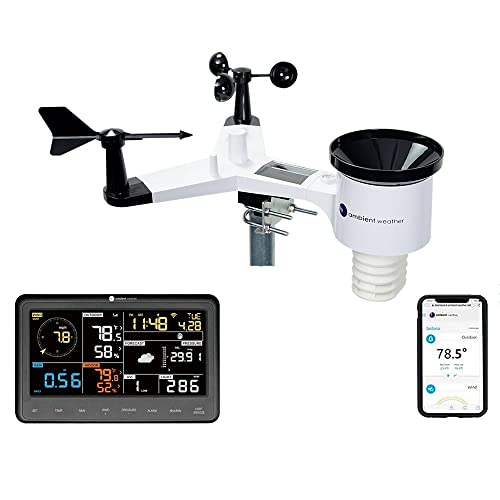
WS-2902A Smart WiFi Wetterstation mit Fernüberwachung und Alarmen
- Complete Weather Station: Includes Sensor-Array and LCD display
- Hyperlocal Weather Data: Wireless sensors monitor home and garden conditions
- Comprehensive Measurements: Wind, temperature, humidity, rainfall, UV, sunlight
As an affiliate, we earn on qualifying purchases.
As an affiliate, we earn on qualifying purchases.
How Market Predictions Reflect Climate Uncertainty
The use of prediction markets like Kalshi to forecast weather events is a relatively recent development. These markets allow participants to bet on outcomes, such as temperature thresholds, based on their expectations and available information. While they can sometimes reflect collective sentiment, they are not substitutes for scientific climate models.
Currently, weather forecasts extend reliably only a few days ahead. Predictions for specific conditions years into the future are speculative, with no scientific consensus or models capable of providing precise temperature estimates for a particular time in 2026.
This specific event, involving a question about a temperature threshold in Chicago nearly three years from now, exemplifies the limitations of long-term weather prediction and the role of markets in filling informational gaps.
“Long-term weather forecasts for specific dates and times are highly uncertain. Market bets do not replace scientific predictions and should be viewed as speculative.”
— Meteorologist Jane Smith

SwitchBot CO2-Melder, CO2 Messgerät mit Thermometer Hygrometer Innen, Luftqualität Messgerät mit CO2-Alarm, Bluetooth CO2 Sensor mit APP, 2 Jahre Datenspeicher, Hub erforderlich
- Multifunktions-Display: Zeigt CO2, Temperatur, Luftfeuchtigkeit, Wetter
- Hochpräziser NDIR-Sensor: Misst CO2 alle 1 Sekunde mit hoher Genauigkeit
- Alarmbenachrichtigungen: Akustisch, visuell und per App bei Grenzwertüberschreitungen
As an affiliate, we earn on qualifying purchases.
As an affiliate, we earn on qualifying purchases.
Limitations of Long-Term Weather Predictions
It is not yet clear whether any scientific model or forecast can accurately predict Chicago’s temperature at that specific time in 2026. The current weather prediction tools are only reliable for short-term forecasts, typically up to a week.
Additionally, the market activity does not provide a scientific basis for the temperature outcome, only reflecting participant bets and expectations, which could be influenced by various factors unrelated to actual climate conditions.
Further clarification from meteorological agencies is needed to understand how, if at all, such predictions could be made reliably in the future.
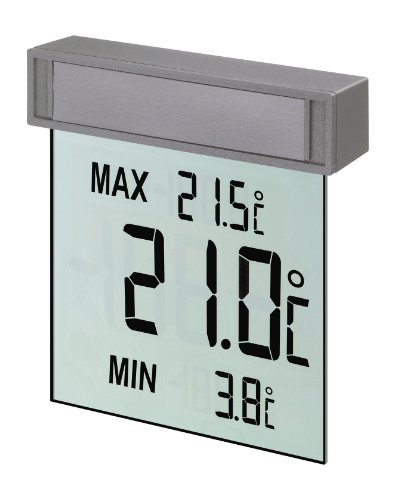
TFA Dostmann Vision digitales Fensterthermometer aussen, 30.1025, selbstklebend, großes Display mit Außentemperatur, Höchst- und Tiefstwerte, 97 x 22 x 105 mm, Silber
- Digital Temperature Display: Large digital screen shows current outdoor temperature
- Max and Min Records: Displays highest and lowest temperature readings
- Easy Window Mounting: Self-adhesive attachment for external window mounting
As an affiliate, we earn on qualifying purchases.
As an affiliate, we earn on qualifying purchases.
Monitoring Future Weather Data and Market Activity
In the coming months and years, meteorologists will continue to refine long-term climate models, but precise predictions for a specific hour in 2026 remain unlikely. Official weather agencies will update forecasts as the date approaches, providing more concrete information.
Market activity on platforms like Kalshi will likely continue to reflect participant expectations but should not be interpreted as scientific forecasts. Observers should watch for updates from meteorological authorities for reliable predictions closer to the date.
Researchers and market participants will also analyze how well such prediction markets perform in forecasting long-term weather events, informing future use and limitations of these tools.
Extreme Weather (Tornadoes To Hurricanes): Earth Facts and Fun Book for Kids (English Edition)
As an affiliate, we earn on qualifying purchases.
As an affiliate, we earn on qualifying purchases.
Key Questions
Can we accurately predict Chicago’s temperature on July 26, 2026, now?
No, current scientific methods do not allow accurate long-term temperature predictions for specific times and dates several years in advance. Forecasts are only reliable for short-term periods.
What does the market activity indicate about future weather in Chicago?
The recent trades on Kalshi suggest some participants believe the temperature might exceed 83.99°F at that time, but this is speculative and not based on scientific weather models.
Should I trust market predictions for weather forecasting?
Market predictions can reflect collective expectations but are not substitutes for scientific climate models. They should be viewed as speculative indicators rather than definitive forecasts.
Will meteorologists provide a forecast for this specific event before July 2026?
Unlikely. Weather forecasts become unreliable beyond a week or two, and specific forecasts for July 26, 2026, are not expected before that date approaches.
Source: kalshi
Fall Picks
fall essentials
As an affiliate, we earn on qualifying purchases.