
For Black Friday smart home devices, my best overall pick is the Kasa Smart Wi-Fi Power Strip HS300: six separately controlled outlets make it useful for organizing several devices from one spot. The Amazon Echo Hub stands out for managing a broader smart home, while the Linkind Matter Smart Plug 4-Pack is a flexible choice for adding simple outlet control. The main tradeoffs are whether you want a single-purpose plug or a central control device, how much setup your existing ecosystem can support, and whether the device fits indoors, outdoors, or at a wall switch. I compare all 15 options by their practical role, compatibility, and setup demands. Continue reading for the full breakdown and help matching a pick to your home.
Complete the kit


Key Takeaways
- The HS300 is the most versatile outlet pick: its six individually controlled outlets suit a desk or entertainment area better than a basic single plug, but it takes more space.
- Matter support is a compatibility differentiator: the Linkind Matter Smart Plug 4-Pack is a stronger fit for a mixed-platform home than a plug chosen only for Alexa.
- Amazon’s Echo models serve different jobs: the Spot and Echo Time focus on bedside clock use, the Show 5 and Show 11 add screens, and the Echo Hub is built around smart home controls.
- Outdoor placement calls for a purpose-built device: the Kasa EP40 offers two independently controlled outlets for outdoor use, unlike the indoor plug multipacks.
- More outlets do not always mean a better fit: compact plug packs suit scattered lamps and appliances, while the HS300 makes more sense when several devices share one location.
| Amazon Echo Spot Smart Alarm Clock with Alexa, Black |  | Best Bedside Smart Clock | Display: 2.83-inch touchscreen, 240 × 320 pixels | Dimensions: 4.5 × 4.1 × 4.4 inches | Weight: 14.3 oz | VIEW LATEST PRICE | See Our Full Breakdown |
| Amazon Smart Plug with Alexa |  | Best for Simple Alexa Automation | Dimensions: 3.2 × 1.5 × 2.2 inches | Weight: 3.1 oz | Input: 120 VAC, 60 Hz, 15 A maximum | VIEW LATEST PRICE | See Our Full Breakdown |
| Amazon Echo Show 5 Smart Display, Charcoal |  | Best Compact Display for Calls | Display: 5.5-inch touchscreen | Camera: 2 MP with built-in shutter | Dimensions: 5.8 × 3.6 × 3.2 inches | VIEW LATEST PRICE | See Our Full Breakdown |
| Govee Smart Plug, Wi-Fi and Bluetooth, 4-Pack |  | Best Multi-Plug Value | Quantity: 4 plugs | Connectivity: Wi-Fi and Bluetooth; 2.4 GHz Wi-Fi only | Voice assistants: Amazon Alexa and Google Assistant | VIEW LATEST PRICE | See Our Full Breakdown |
| Amazon Echo Time Smart Clock, Graphite |  | Best for Customizable Sleep Routines | Color: Graphite | Clock faces: Hundreds of variations | Smart-home compatibility: Tens of thousands of compatible devices | VIEW LATEST PRICE | See Our Full Breakdown |
| Linkind Matter Smart Plug, 4-Pack | 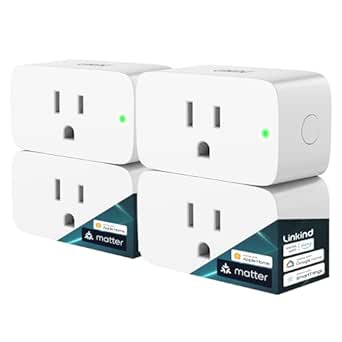 | Best for Cross-Platform Matter Setups | Model: LC09003256 | Pack quantity: 4 plugs | Connectivity: Matter and 2.4 GHz Wi-Fi | VIEW LATEST PRICE | See Our Full Breakdown |
| Kasa Smart Wi-Fi Power Strip HS300 with 6 Individually Controlled Outlets and 3 USB Ports |  | Best for a Smart Home Office | Model: HS300 | AC outlets: 6 independently controlled | USB ports: 3 | VIEW LATEST PRICE | See Our Full Breakdown |
| Kasa EP40 Outdoor Smart Plug with 2 Independently Controlled Outlets |  | Best for Outdoor Lighting | Model: EP40 | Outlets: 2 independently controlled AC outlets | Maximum per outlet: 15 A / 1875 W | VIEW LATEST PRICE | See Our Full Breakdown |
| Amazon Echo Dot Max Smart Speaker with Alexa, Graphite |  | Best Premium Smart-Home Hub | Dimensions and weight: 4.27 × 4.27 × 3.9 in; 505.3 g | Audio bandwidth: 53 Hz–16 kHz | Drivers: 1 × 0.8 in tweeter; 1 × 2.5 in woofer | VIEW LATEST PRICE | See Our Full Breakdown |
| EIGHTREE Smart Wi-Fi Plug, 4-Pack, 15A |  | Best Hub-Free Starter Pack | Model: ET01B-4 | Quantity: 4 plugs | Wi-Fi: 2.4 GHz | VIEW LATEST PRICE | See Our Full Breakdown |
| GHome Smart Plug Mini, 4-Pack, White | 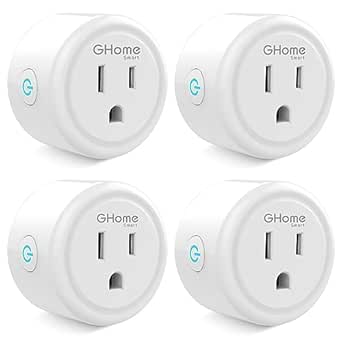 | Best Value for Simple Scheduling | Pack quantity: 4 | Wireless network: 2.4 GHz Wi-Fi only | Voice assistants: Amazon Alexa and Google Home | VIEW LATEST PRICE | See Our Full Breakdown |
| Kasa HS200 Single-Pole Smart Light Switch, Requires Neutral Wire | 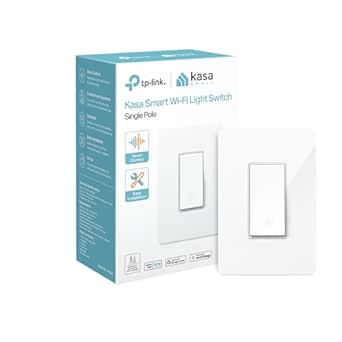 | Best for Built-In Light Control | Model: HS200 | Switch type: Single-pole, one-way | Wiring requirement: Neutral wire required | VIEW LATEST PRICE | See Our Full Breakdown |
| Kasa Smart Wi-Fi Mini Plug, 15A, 4-Pack (EP10P4) | 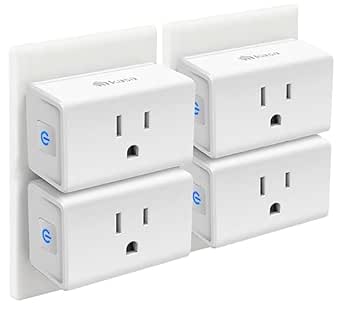 | Best Value for a Rated 15A Plug Pack | Model: EP10P4 | Pack size: 4 plugs | Maximum current: 15 A | VIEW LATEST PRICE | See Our Full Breakdown |
| Amazon Echo Hub 8-Inch Smart Home Control Panel |  | Best Dedicated Smart Home Controller | Display: 8-inch touchscreen, 1280 × 800 resolution | Connectivity: Dual-band Wi-Fi (802.11a/b/g/n/ac), Bluetooth | Smart home protocols: Wi-Fi, Bluetooth Low Energy Mesh, Zigbee, Thread, Matter (controller only), Sidewalk | VIEW LATEST PRICE | See Our Full Breakdown |
| Amazon Echo Show 11 Smart Display with Full HD Touchscreen and Spatial Audio, Graphite |  | Best Premium Smart Display | Display: 10.95-inch Full HD touchscreen, 1920 × 1200 resolution | Dimensions: 10 × 5 × 7.2 in (255 × 127 × 182 mm) | Weight: 45.92 oz (1302 g) | VIEW LATEST PRICE | See Our Full Breakdown |
More Details on Our Top Picks
Amazon Echo Spot Smart Alarm Clock with Alexa, Black
The Echo Spot is the most clock-focused screen in this group: its 2.83-inch display keeps the time, weather, reminders, and song titles visible without taking up much bedside space. Alexa routines and voice control can link a morning alarm to compatible lights or other devices, giving it more smart-home utility than a basic clock. Compared with the Echo Show 5, the Spot skips a camera and larger screen, so it suits people who want glanceable information rather than video calls. Its built-in speaker handles everyday audio, but the small display and speaker are less suited to watching shows or filling a room with sound. The eero Built-in Wi-Fi extension is a bonus only for compatible eero setups, not a standalone reason to choose it.
Pros:- Compact touchscreen displays time, weather, reminders, and track information
- Alexa routines connect bedside alarms with compatible smart-home devices
- Built-in speaker plays music, podcasts, and audiobooks
- No camera, with a microphone-off button and app privacy controls
Cons:- Small screen is less suitable for video or extended visual content than the Echo Show 5
- eero Built-in requires a compatible eero router, account linking, and the eero app
- Does not support ad-hoc or peer-to-peer Wi-Fi networks
Best for: Alexa households wanting a compact bedside clock that shows useful information and can trigger morning routines
Not ideal for: Buyers who want video calls, a larger screen, or Wi-Fi extension without a compatible eero router
- Display:2.83-inch touchscreen, 240 × 320 pixels
- Dimensions:4.5 × 4.1 × 4.4 inches
- Weight:14.3 oz
- Speaker:1.73-inch full-range built-in speaker
- Camera:None
- Wi-Fi:Dual-band 802.11a/b/g/n/ac, 2.4 and 5 GHz
- Bluetooth:A2DP audio streaming and AVRCP voice control
- eero Built-in:Up to 1,000 sq. ft. additional coverage; compatible eero router required
Our verdict“Choose the Echo Spot for a compact Alexa bedside clock, but pick the Echo Show 5 if video calls and a larger display matter more.”
Amazon Smart Plug with Alexa
The Amazon Smart Plug is the straightforward choice for turning a compatible lamp or small appliance into an Alexa-controlled device. It needs no hub, fits a standard indoor outlet, and leaves the neighboring socket free—useful when a power strip or crowded outlet would make bulkier plugs awkward. Schedules and routines can automate a lamp without adding a separate controller. Compared with the Govee Smart Plug 4-Pack, this is a single plug with Alexa-only compatibility rather than a multi-plug option that also supports Google Assistant. That narrower ecosystem is a real limitation if your home uses another assistant. It also relies on 2.4 GHz Wi-Fi and is for indoor use, so it is not the pick for outdoor lighting or buyers who want cross-platform flexibility.
Pros:- Works with Alexa without requiring a separate smart-home hub
- Compact body leaves the second wall outlet free
- Supports schedules, voice control, and Alexa routines
- Automatically reconnects to Alexa after power or Wi-Fi outages
Cons:- Compatible only with Alexa, not other voice assistants or smart hubs
- Uses 2.4 GHz Wi-Fi only
- Indoor use only
Best for: Alexa users who want to automate one indoor lamp or compatible appliance without adding a hub
Not ideal for: Google Assistant households, outdoor setups, or buyers who need several plugs or 5 GHz Wi-Fi support
- Dimensions:3.2 × 1.5 × 2.2 inches
- Weight:3.1 oz
- Input:120 VAC, 60 Hz, 15 A maximum
- Maximum output:15 A
- Network:2.4 GHz Wi-Fi, 802.11 b/g/n
- Use:Indoor only
- Compatibility:Alexa app and compatible Alexa devices; no other voice assistants or smart hubs
- Warranty:1-year limited warranty
Our verdict“Pick this plug for one simple Alexa-controlled indoor device; choose the Govee four-pack if you need multiple plugs or Google Assistant support.”
Amazon Echo Show 5 Smart Display, Charcoal
The Echo Show 5 makes sense when a bedside or counter device needs to do more than show the time: its 5.5-inch touchscreen supports visual updates, compatible smart-home controls, and video calls through a built-in 2 MP camera. A physical camera shutter and microphone/camera-off button give privacy-conscious households direct ways to disable those features. Compared with the Echo Spot, it takes up more room but adds the camera and a larger screen; that makes it a better fit for calls and visual content, not necessarily a better alarm clock. Its compact size also means the built-in speaker is not a substitute for a larger audio setup. Some skills and services may carry separate fees, and it does not support ad-hoc or peer-to-peer Wi-Fi networks.
Pros:- 5.5-inch touchscreen shows visual information and smart-home controls
- Built-in 2 MP camera supports video calls and compatible camera viewing
- Camera shutter and microphone/camera-off control provide direct privacy options
- Compact footprint suits bedside tables and smaller counters
Cons:- Larger and more camera-oriented than the Echo Spot for buyers who mainly want a clock
- Small built-in speaker is not suited to room-filling audio
- Some skills and services may require subscriptions or other fees
Best for: Alexa users who want a small smart display for video calls, visual updates, and compatible-device controls
Not ideal for: Buyers seeking a camera-free bedside clock or a larger display and stronger room-filling audio
- Display:5.5-inch touchscreen
- Camera:2 MP with built-in shutter
- Dimensions:5.8 × 3.6 × 3.2 inches
- Weight:16.1 oz
- Speaker:1.75-inch full-range built-in speaker
- Wi-Fi:Dual-band 802.11a/b/g/n/ac
- Bluetooth:A2DP and AVRCP support
- Processor:MediaTek MT 8169
Our verdict“Choose the Echo Show 5 if video calls and a practical touchscreen matter more than the Echo Spot’s smaller, camera-free clock design.”
Govee Smart Plug, Wi-Fi and Bluetooth, 4-Pack
The Govee Smart Plug 4-Pack is the practical choice when several indoor devices need schedules or voice control at once. The app supports grouping, and the plugs work with both Alexa and Google Assistant, giving them broader household compatibility than the Amazon Smart Plug, which is Alexa-only and sold as a single plug. Wi-Fi and Bluetooth connectivity add setup and control options, though Wi-Fi remains limited to 2.4 GHz and the plugs do not use a hub. The product data lists both 10 A and 11 A ratings, so I would verify the rating for the intended appliance before connecting it. That specification ambiguity makes this less reassuring for higher-draw devices than a plug with a clearly stated load limit.
Pros:- Four plugs let buyers automate multiple devices in one setup
- Works with Amazon Alexa and Google Assistant
- App offers scheduling and group control
- Wi-Fi and Bluetooth connectivity with no hub required
Cons:- Supports 2.4 GHz Wi-Fi only
- Product information lists both 10 A and 11 A ratings
- No outdoor-use rating is provided
Best for: Households that want to automate several compatible indoor devices and use either Alexa or Google Assistant
Not ideal for: Buyers who need 5 GHz Wi-Fi, outdoor plugs, or a clearly documented load rating for a higher-draw appliance
- Quantity:4 plugs
- Connectivity:Wi-Fi and Bluetooth; 2.4 GHz Wi-Fi only
- Voice assistants:Amazon Alexa and Google Assistant
- Amperage:Product data lists both 10 A and 11 A
- Plug type:Type B
- Safety certifications:ETL and FCC
- Features:Scheduling, group control, and no hub required
- Model:B5081
Our verdict“Choose the Govee pack for multi-device Alexa or Google Assistant automation, but confirm its load rating before using it with demanding appliances.”
Amazon Echo Time Smart Clock, Graphite
The Echo Time Smart Clock is aimed at buyers who want a personalized bedside display and routine-driven wake-up, rather than the broader visual features of a smart display. Hundreds of clock-face variations let it suit different bedroom styles, while smart alarms, ambient sounds, and Alexa voice control support bedtime and morning habits. Its lighter-sleep detection may appeal to people seeking a gentler wake-up approach, though the product information does not specify how that detection works. Compared with the Echo Spot, this model emphasizes clock customization and sleep routines rather than a stated touchscreen size and detailed connectivity specifications. It can also control compatible smart-home devices, but those functions depend on device compatibility; some Alexa+ features require Prime membership. Buyers who want video calls or a clearly specified screen should look at the Echo Show 5 instead.
Pros:- Hundreds of clock-face variations support personal display preferences
- Smart alarms include lighter-sleep detection
- Ambient sounds and other audio support bedtime routines
- Alexa voice control can link alarms with compatible smart-home devices
Cons:- Some Alexa+ features require a Prime membership
- Smart-home functions depend on compatible devices
- Product information does not provide display dimensions or connectivity specifications
Best for: Alexa users who prioritize customizable clock faces, ambient sounds, and smart bedtime or morning routines
Not ideal for: Buyers who want video calls, detailed published hardware specifications, or smart-home control independent of compatible devices
- Color:Graphite
- Clock faces:Hundreds of variations
- Smart-home compatibility:Tens of thousands of compatible devices
- Privacy controls:Microphone enable/disable button
- Alarm features:Smart alarms with lighter-sleep detection
- Audio:Ambient sounds and other audio
- Voice control:Alexa
Our verdict“Choose the Echo Time for a customizable Alexa sleep clock, but favor the Echo Show 5 if you want a specified touchscreen and video-call capability.”
Linkind Matter Smart Plug, 4-Pack
For households that mix smart-home platforms, this four-pack stands out because Matter support lets the plugs fit into Apple Home, Alexa, Google Home, or SmartThings setups. Compared with the EIGHTREE Smart Wi-Fi Plug, Linkind offers a clearer route into Matter-based control and can let configured Matter devices communicate locally during an internet outage. Remote control, schedules, and timers cover everyday automation, while overload and short-circuit protection add reassurance when controlling appliances.
The tradeoff is setup: using those major platforms requires a Matter-certified hub or controller, and the network must support 2.4 GHz Wi-Fi and IPv6. AiDot is an alternative without a hub, but it may not suit buyers who want to stay entirely within another ecosystem. I’d choose Linkind for an existing Matter home, not as the simplest first smart plug.
Pros:- Matter support spans Apple Home, Alexa, Google Home, and SmartThings with a compatible controller.
- Local network control for configured Matter devices can continue during an internet outage.
- Remote control, schedules, and timers support everyday automation.
- Compact construction includes short-circuit and overload protection.
Cons:- A Matter-certified hub or controller is needed for the major listed platforms; AiDot is the hub-free option.
- Requires 2.4 GHz Wi-Fi and IPv6, which may rule out some network setups.
Best for: Households with a Matter controller that use multiple smart-home platforms and want four remotely controlled plugs.
Not ideal for: Buyers without an IPv6-capable 2.4 GHz network or Matter controller who want straightforward setup in Apple Home, Alexa, Google Home, or SmartThings.
- Model:LC09003256
- Pack quantity:4 plugs
- Connectivity:Matter and 2.4 GHz Wi-Fi
- Network requirement:IPv6
- Current and power capacity:15 A; 1800 W
- Plug type:Type A
- Materials:Copper and fire-resistant materials
- Certifications:FCC, ETL
Our verdict“Choose Linkind if you already have a Matter controller and want a flexible four-plug set; skip it if hub-free setup is your priority.”
Kasa Smart Wi-Fi Power Strip HS300 with 6 Individually Controlled Outlets and 3 USB Ports
The HS300 is the most useful pick for a cluster of desk equipment: six outlets can be controlled individually, so a lamp, monitor, and other connected gear need not switch on or off together. Its three built-in USB ports also reduce the need for separate charging adapters, while energy monitoring can help you see how much power connected devices use. Compared with the Linkind four-pack, this is a single, centralized power strip rather than plugs you can spread around the home.
That convenience comes with a larger footprint and a 2.4 GHz Wi-Fi requirement. The USB ports charge devices but cannot be controlled as separate smart outlets, so they do not offer the same automation flexibility as the six AC sockets. I’d favor the HS300 for a desk or media area that needs outlet-by-outlet control and surge protection, rather than for buyers seeking compact plugs for scattered lamps.
Pros:- Six AC outlets are controlled independently for more precise routines.
- Energy monitoring in the Kasa app helps track connected-device consumption.
- Three built-in USB ports add charging capacity without separate adapters.
- ETL-certified surge protection and an aluminum enclosure suit a shared equipment area.
Cons:- The 14.17-inch strip takes more space than individual smart plugs.
- Requires a 2.4 GHz Wi-Fi network.
- USB ports do not have independent smart outlet control.
Best for: Remote workers and media-room owners who want separate control and energy monitoring for several devices in one location.
Not ideal for: Buyers who need compact plugs for outlets around the home, or who want smart control of each USB charging port.
- Model:HS300
- AC outlets:6 independently controlled
- USB ports:3
- Input:100–125 V, 60 Hz, 15 A
- Maximum total load:1875 W
- USB output:5 V / 2.4 A per port
- Surge protection:ETL certified
- Dimensions and weight:14.17 × 2.49 in; 702 g
- Voice assistants:Alexa, Google Assistant, Microsoft Cortana
Our verdict“Pick the HS300 for a desk or entertainment setup that needs several independently controlled outlets; choose Linkind plugs for more distributed placement.”
Kasa EP40 Outdoor Smart Plug with 2 Independently Controlled Outlets
For seasonal lights and other outdoor devices, the EP40 brings smart control to two outlets in one weather-resistant unit. Because each socket works independently, a buyer can schedule separate outdoor loads rather than treating them as a single switch. Its IP64 weather resistance and protective covers make it a more suitable outdoor choice than the indoor Linkind or EIGHTREE four-packs, which are not described as weather-resistant.
The Kasa app supports remote control, countdown timers, and schedules tied to sunrise or sunset, useful when daylight shifts through the season. Alexa and Google Assistant work without a hub, but the plug still needs 2.4 GHz Wi-Fi. It is also larger than a standard indoor smart plug, and each outlet is limited to 15 A / 1875 W. I’d pick it for outdoor routines, not for anyone needing Matter compatibility or a plug for a tight indoor outlet.
Pros:- Two outlets can be controlled independently.
- IP64 weather resistance and protective covers suit outdoor use.
- Schedules, countdown timers, remote control, and sunrise or sunset offsets support flexible routines.
- Works with Alexa and Google Assistant without a separate hub.
Cons:- Requires a 2.4 GHz Wi-Fi connection.
- Each outlet is limited to 15 A / 1875 W.
- The outdoor unit is bulkier than the indoor four-pack plugs in this roundup.
Best for: Homeowners automating two outdoor lighting or appliance circuits who use Alexa or Google Assistant.
Not ideal for: Buyers seeking Matter support, a hub-free option for a different ecosystem, or a compact indoor plug for tight spaces.
- Model:EP40
- Outlets:2 independently controlled AC outlets
- Maximum per outlet:15 A / 1875 W
- Weather resistance:IP64, with protective outlet covers
- Wi-Fi:2.4 GHz required
- Voice assistants:Amazon Alexa, Google Assistant
- Dimensions:4.9 × 2.38 × 2.29 in
- Certification and warranty:ETL; 2 years
Our verdict“Choose the EP40 for independently scheduled outdoor devices; for indoor outlets or Matter-based control, Linkind is a better fit.”
Amazon Echo Dot Max Smart Speaker with Alexa, Graphite
The Echo Dot Max combines a speaker with a built-in smart-home hub, making it the most capable central device in this group for buyers building beyond a few Wi-Fi plugs. Its hub supports Zigbee, Matter, and Thread, while presence and temperature sensors can trigger routines based on activity or room conditions. Compared with the Kasa HS300, which focuses on managing devices plugged into one strip, the Dot Max can help coordinate compatible devices across a room or home.
Room-adapting audio and a dedicated woofer make it more than a control point, but this premium, multi-purpose role may be excessive if all you need is a basic plug set. The eero network extension also depends on a compatible eero router and extra setup, so it is not a standalone Wi-Fi upgrade. I’d choose this over a simple smart plug when Alexa control, sensing, and hub functions justify adding a speaker; skip it if you do not need those layers.
Pros:- Built-in hub supports Zigbee, Matter, and Thread devices.
- Presence and temperature sensors can trigger home routines.
- Room-adapting audio, a 2.5-inch woofer, and streaming support add speaker value.
- Microphone disable button provides a direct privacy control.
Cons:- eero Built-in requires a compatible eero router, linked accounts, and setup in the eero app.
- Its speaker and hub functions may be unnecessary for buyers who only want plug automation.
- Bluetooth PIN-code speakers and hands-free voice control for Mac OS X devices are not supported.
Best for: Alexa households planning to add Matter, Zigbee, or Thread devices and wanting room audio and sensor-triggered routines in one unit.
Not ideal for: Buyers who only need simple plug scheduling, do not use Alexa, or expect eero extension without a compatible eero router.
- Dimensions and weight:4.27 × 4.27 × 3.9 in; 505.3 g
- Audio bandwidth:53 Hz–16 kHz
- Drivers:1 × 0.8 in tweeter; 1 × 2.5 in woofer
- Wi-Fi:Wi-Fi 6E
- Bluetooth:Bluetooth Low Energy 5.3; A2DP and AVRCP
- Smart-home hub:Zigbee, Matter, Thread Border Router
- Sensors:Ambient temperature, ambient light, presence detection
- eero Built-in:Up to 1,000 sq. ft. additional coverage and up to 100 Mbps; compatible eero router required
Our verdict“Choose the Echo Dot Max if you want an Alexa speaker that also anchors a broader smart-home setup; for isolated outlet control, a smart plug is simpler.”
EIGHTREE Smart Wi-Fi Plug, 4-Pack, 15A
EIGHTREE is the straightforward starter set for buyers who want four plugs without buying a hub. Set up through the Smart Life app, then use remote control, schedules, timers, countdowns, and cycles; Alexa and Google Assistant voice control are available through that app, with SmartThings integration also listed. Compared with the Linkind Matter Smart Plug, EIGHTREE avoids the need for a Matter controller, making it a simpler fit for a basic 2.4 GHz Wi-Fi home.
That simplicity has limits: voice control depends on Smart Life setup, and the plugs do not connect directly to Alexa. The most consequential caveat is a mismatch in the supplied capacity information: the title says 15 A, while the specifications say 10 A. I would not choose this set for a load where that distinction matters until the rating is verified. Its compact design helps in crowded outlets, but Linkind is the clearer choice for buyers prioritizing Matter interoperability.
Pros:- Works without a separate hub.
- Supports remote control, schedules, timers, countdowns, and cycles through Smart Life.
- Compact form is suited to crowded outlet areas.
- Lists Alexa, Google Assistant, and SmartThings integration.
Cons:- Capacity is inconsistent: the title lists 15 A, but product specifications list 10 A.
- Alexa voice control requires Smart Life setup; direct Alexa connection is not supported.
- Works only with 2.4 GHz Wi-Fi and does not list Matter support.
Best for: First-time smart-plug buyers who want a hub-free four-pack for lower-demand household devices and already use Smart Life.
Not ideal for: Buyers who need a confirmed 15 A rating, direct Alexa setup, Matter support, or control on a network without 2.4 GHz Wi-Fi.
- Model:ET01B-4
- Quantity:4 plugs
- Wi-Fi:2.4 GHz
- Listed maximum amperage:15 A in title; 10 A in product specifications
- Voice assistants:Alexa and Google Assistant via Smart Life
- Smart-home integration:SmartThings
- Dimensions and weight:4.06 × 4.06 × 2.28 in; 1.92 oz
- Certifications and warranty:ETL, FCC; 2 years
Our verdict“Consider EIGHTREE for an inexpensive-to-set-up style of hub-free automation, but verify its actual amperage rating before connecting higher-load appliances.”
GHome Smart Plug Mini, 4-Pack, White
For a Black Friday smart-home starter kit, the GHome Smart Plug Mini 4-Pack spreads basic automation across several lamps or small appliances without adding a hub. App control, voice commands through Alexa or Google Home, and schedules and auto-off timers cover the everyday jobs: turning lights on at set times or cutting power after use. Its 2 × 2 × 1-inch body is designed to leave outlet space available, while group control makes several plugs easier to manage together.
Compared with the Kasa EP10P4, GHome offers a similar compact, four-plug approach, but the Kasa listing specifies a 15A maximum load and adds SmartThings compatibility. GHome’s tradeoff is a narrower setup path: it works on 2.4 GHz Wi-Fi only and must be connected to the GHome app before Alexa or Google Home linking. Skip it if you want broader platform support or a dedicated control panel such as the Echo Hub.
Pros:- Four plugs provide a straightforward way to automate multiple household devices.
- Supports voice control, app control, and grouped control.
- Schedules and auto-off timers can automate everyday routines.
- Compact 2 × 2 × 1-inch dimensions help preserve access to nearby outlets.
Cons:- Requires a 2.4 GHz Wi-Fi network.
- Must be set up in the GHome app before linking to Alexa or Google Home.
Best for: Shoppers setting up several lamps or small appliances who want app, voice, and timer control without buying a hub.
Not ideal for: Households using only 5 GHz Wi-Fi or buyers who want SmartThings compatibility or a central touchscreen controller.
- Pack quantity:4
- Wireless network:2.4 GHz Wi-Fi only
- Voice assistants:Amazon Alexa and Google Home
- Dimensions:2 × 2 × 1 in
- Plug type:Type B
- Material:Polycarbonate (PC)
- Certifications:ETL, FCC
Our verdict“Choose the GHome four-pack for straightforward, multi-room scheduling, but pick the Kasa EP10P4 if its stated load rating and SmartThings support matter more.”
Kasa HS200 Single-Pole Smart Light Switch, Requires Neutral Wire
The Kasa HS200 suits buyers who want smart control at the wall rather than adding a plug behind each lamp. Once installed on a compatible single-pole circuit, it can operate lights, ceiling fans, and other fixtures through the Kasa app or Alexa and Google Assistant. Scheduling, Away Mode, and remote control make it useful for recurring routines and for changing a light while away from home; no separate hub is required.
Unlike the GHome Smart Plug Mini or Kasa EP10P4, the HS200 controls a hardwired fixture and leaves outlets free. That makes it the more integrated choice for ceiling lights, but also the less accessible one: installation involves electrical wiring, the switch needs a neutral wire, and it supports single-pole, one-way setups. Choose a plug instead if you rent, want a quick setup, or cannot confirm your wiring; buyers unfamiliar with electrical work should use an electrician.
Pros:- Controls compatible hardwired lights, ceiling fans, and other fixtures.
- Offers Kasa app control, Alexa and Google Assistant voice control, and scheduling.
- Away Mode can vary operation while the household is out.
- UL certified and does not require a separate hub.
Cons:- Requires a neutral wire and compatible single-pole wiring.
- Installation involves electrical work and may call for an electrician.
- Uses 2.4 GHz Wi-Fi rather than a dual-band connection.
Best for: Homeowners with a compatible neutral-wire, single-pole circuit who want scheduled app and voice control for a fixed light or fan.
Not ideal for: Renters, buyers without a neutral wire, or anyone seeking a no-tools solution like a plug-in smart outlet.
- Model:HS200
- Switch type:Single-pole, one-way
- Wiring requirement:Neutral wire required
- Connectivity:2.4 GHz Wi-Fi
- Input voltage:100–120 VAC, 50/60 Hz
- Wattage:600 W
- Voice assistants:Amazon Alexa, Google Assistant
- Safety certification:UL certified
Our verdict“Choose the HS200 for a permanent, wall-switch upgrade on compatible wiring; choose a GHome or Kasa smart plug for simpler installation and portability.”
Kasa Smart Wi-Fi Mini Plug, 15A, 4-Pack (EP10P4)
The Kasa EP10P4 makes the most sense when a Black Friday smart-home purchase needs to cover several outlets and the stated electrical limits matter as much as app control. This four-pack supports a 15A maximum current and 1800W maximum wattage at 120V, with schedules, timers, Away Mode, voice control, and app control. Its compact design is intended to leave the second wall outlet available, and it needs no separate hub.
Compared with the GHome Smart Plug Mini, the Kasa pack lists a specific maximum load and adds Samsung SmartThings alongside Alexa and Google Assistant. That broader compatibility makes it the stronger fit for a mixed-platform setup. The tradeoff is dependence on the Kasa or Tapo app for setup and control, plus 2.4 GHz Wi-Fi requirements. It remains a plug-in solution, not a substitute for the hardwired Kasa HS200 when the goal is controlling a wall fixture directly.
Pros:- Four plugs support app, voice, schedule, timer, and Away Mode control.
- Lists a maximum current of 15A and maximum wattage of 1800W at 120V.
- Works with Alexa, Google Assistant, and Samsung SmartThings.
- Compact design helps keep the adjacent wall outlet accessible.
Cons:- Requires a 2.4 GHz Wi-Fi connection.
- Setup and app control require the Kasa or Tapo app and a compatible mobile operating system.
Best for: Households automating several lamps and small appliances that want a four-pack with a stated 15A limit and SmartThings support.
Not ideal for: Buyers who need 5 GHz-only Wi-Fi, dislike app-based setup, or want to control a hardwired ceiling light at its wall switch.
- Model:EP10P4
- Pack size:4 plugs
- Maximum current:15 A
- Maximum wattage:1800 W
- Operating voltage:120 V
- Wi-Fi:2.4 GHz
- Voice assistants:Amazon Alexa, Google Assistant
- Additional compatibility:Samsung SmartThings
- Certifications:UL, RoHS, FCC, IC
Our verdict“Pick the EP10P4 for a versatile four-plug setup with a specified 15A limit and SmartThings support; choose the HS200 for fixed, hardwired lighting.”
Amazon Echo Hub 8-Inch Smart Home Control Panel
The Amazon Echo Hub is the most control-focused option here: its 8-inch touchscreen puts compatible devices, camera feeds, security controls, and routines on a stationary dashboard. The built-in hub supports Zigbee, Thread, and Matter controller functionality, along with Wi-Fi, Bluetooth, and Sidewalk, so it can serve a broader smart-home setup than the plug-in options or a display designed mainly for calls and entertainment. Wall-mounting hardware is included, making it suited to a shared spot where household members can reach the controls.
Compared with the Echo Show 11, the Hub gives the smart-home interface more emphasis and uses a smaller screen; the Show 11 offers a larger Full HD display, spatial audio, and a camera. The Hub’s tradeoffs are its stationary, internet-dependent design and extra costs for a tabletop stand, cable pass-throughs, or a compatible PoE converter. Its Matter and Thread support is specified as controller functionality, so buyers should check device requirements rather than assume every protocol feature is covered.
Pros:- Customizable touchscreen dashboard with rearrangeable sections and resizable controls.
- Built-in hub supports Wi-Fi, Bluetooth, Zigbee, Thread, Matter controller functionality, and Sidewalk.
- Can manage compatible security devices, camera feeds, and routines.
- Includes wall-mounting hardware and a microphone-off button.
Cons:- Requires internet access and is designed to stay in one place.
- Tabletop stand, cable pass-throughs, and compatible PoE converter are sold separately.
- Matter and Thread support is limited to controller functionality.
Best for: Alexa households with several compatible smart devices, cameras, or security controls that would benefit from a shared wall-mounted dashboard.
Not ideal for: Buyers seeking a portable display, a camera for video calls, or an included tabletop stand.
- Display:8-inch touchscreen, 1280 × 800 resolution
- Connectivity:Dual-band Wi-Fi (802.11a/b/g/n/ac), Bluetooth
- Smart home protocols:Wi-Fi, Bluetooth Low Energy Mesh, Zigbee, Thread, Matter (controller only), Sidewalk
- Audio:Pair of top-ported full-range speakers with stereo playback
- Sensors:Passive infrared proximity sensor, ambient light sensor
- Power:12.5 W adapter included; compatible USB-C PD accessories supported
- Power over Ethernet:Supported with compatible USB-C converter
- Mounting:Wall mount included; tabletop stand sold separately
Our verdict“Choose the Echo Hub when a dedicated, wall-mounted control surface matters more than entertainment features or portability.”
Amazon Echo Show 11 Smart Display with Full HD Touchscreen and Spatial Audio, Graphite
The Echo Show 11 is the premium choice for buyers who want a room display to do more than show smart-home controls. Its 10.95-inch Full HD touchscreen, spatial audio, and 13 MP auto-framing camera suit video calls and entertainment, while the built-in Zigbee, Matter, and Thread hub can connect supported smart-home devices. Presence and temperature sensing add another layer for compatible features, and the camera and microphone can be disabled using built-in privacy controls.
Compared with the Echo Hub, the Show 11 offers a larger, higher-resolution screen and a camera, so it fits a kitchen or shared room where calls and media matter alongside device control. The Hub is the more focused pick for a wall-mounted smart-home dashboard. The Show 11’s larger footprint and 45.92-ounce weight make it a less discreet control panel, and its specified Bluetooth limitations may matter to some setups: PIN-requiring Bluetooth speakers are unsupported, and hands-free control for connected mobile devices is not supported on Mac OS X.
Pros:- Large 10.95-inch Full HD touchscreen pairs smart-home controls with entertainment and video calls.
- 13 MP camera includes auto framing and 3.3x zoom.
- Built-in hub supports Zigbee, Matter, and Thread Border Router functionality.
- Microphone and camera can be disabled with built-in privacy controls.
Cons:- Larger and heavier than the dedicated Echo Hub control panel.
- Does not support Bluetooth speakers that require PIN codes.
- Hands-free voice control for connected mobile devices is not supported on Mac OS X.
Best for: Households that want a large shared display for video calls and entertainment alongside control of compatible Zigbee, Matter, and Thread devices.
Not ideal for: Buyers seeking a compact, dedicated wall controller or anyone who needs support for PIN-requiring Bluetooth speakers.
- Display:10.95-inch Full HD touchscreen, 1920 × 1200 resolution
- Dimensions:10 × 5 × 7.2 in (255 × 127 × 182 mm)
- Weight:45.92 oz (1302 g)
- Camera:13 MP with auto framing
- Audio:1 × 2.8-inch woofer and 2 full-range drivers
- Wi-Fi:Wi-Fi 6E (IEEE 802.11ax)
- Smart home hub:Zigbee, Matter, and Thread Border Router
- Bluetooth:Version 5.4
- Sensors:Ambient temperature, ambient light, presence detection, and camera-based Omnisense technology
Our verdict“Choose the Echo Show 11 if you want a large entertainment and video-call display with smart-home hub features, rather than a control panel alone.”
How We Picked
I compared these 15 devices by the problem each one solves, then weighed compatibility, setup demands, everyday control, and placement. For smart plugs, that meant distinguishing simple single-outlet control from multi-outlet coverage, checking for named standards such as Matter, and separating indoor models from the outdoor-rated Kasa EP40. For Echo devices, I considered whether each model is primarily a clock, speaker, display, or dedicated home-control panel rather than treating screen size or feature count as a direct measure of value.
The ranking favors devices with a clear job and a useful balance of flexibility and effort. The Kasa HS300 ranks first for its range of independently controlled outlets; the Linkind Matter pack and Echo Hub follow for buyers who need broader compatibility or centralized control. More specialized options rank lower for general use, not because they lack purpose, but because their value depends on a specific setting, ecosystem, or installation. I also account for tradeoffs such as hub reliance, neutral-wire requirements, device footprint, and the fact that a multipack is only useful when its outlets match the buyer’s needs.
Factors to Consider When Choosing Black Friday Smart Home Devices
Before choosing a Black Friday smart home device, start with the job you want it to do and the setup you already own. Compatibility and placement can matter more than a longer feature list, especially when a device needs a particular platform, wire, or location. These checks can help prevent a deal from becoming an awkward return.
Check Ecosystem and Matter Support Before You Buy
Make a short list of the voice assistants, hubs, and smart home platforms already in your home before comparing devices. A product that works with Alexa may not offer the same controls through another platform, so check the exact compatibility details rather than assuming that Wi-Fi means universal support. Matter can make a smart plug easier to add across compatible ecosystems, but it does not remove the need for a compatible controller or guarantee that every feature works in every app. A common mistake is buying several plugs first and discovering that each requires a different app or setup path. If you expect to change platforms or share control across devices, favor clearly stated cross-platform support; if your home is already Alexa-focused, a simpler Alexa-centered device may involve less setup. Choose for the ecosystem you can actually manage, not one you might adopt later.
Match the Device to Its Location and Installation
Decide where the device will live before buying: a bedside table, a crowded outlet, an outdoor receptacle, or a wall switch all create different constraints. Indoor smart plugs are not substitutes for an outdoor-rated model, even if the appliance itself is outside only part of the time. A multi-outlet strip can help at a desk, but its size and cord may make it a poor fit behind furniture or in a tight space. Wall switches require more than a compatible bulb: check the wiring, switch type, and whether a neutral wire is present. Buyers often overlook physical clearance, which can prevent a bulky plug from fitting beside another adapter. Measure the space and verify installation requirements before choosing a device based on its smart features alone.
Choose Between Individual Plugs and Shared Control
Think about how many devices you need to control and whether they sit together. A compact plug or multipack suits lamps and small appliances distributed around a home, while a smart power strip is more useful when several devices share one workstation or entertainment area. Separate control matters if you want to switch a lamp off without cutting power to a router or another device on the same strip. A common buying mistake is counting outlets without checking whether each outlet can be controlled independently. Also check the electrical load and device guidance for anything you plan to connect; smart control does not make an unsuitable appliance safe to operate through a plug. Pay for extra outlet capacity only when your layout can use it.
Decide Whether a Screen or a Dedicated Panel Adds Value
Echo screens and a dedicated control panel can simplify routines, but they solve different problems from a smart speaker or plug. A clock-focused device may be a better bedside fit if you mainly want time, alarms, and voice control, while a display can make visual information and touch interaction easier to access. A dedicated panel makes more sense when household members need a shared place to manage smart home devices. The tradeoff is that screens take more room and may add features you rarely use. Before buying one, consider who will use it, where it will sit, and whether touch controls would be easier than reaching for a phone or speaking. Don’t choose a larger display just because it offers more screen area; match its role to a routine you want to improve.
Plan for Setup, Maintenance, and Household Use
Smart devices still need a reliable network, account setup, app permissions, and occasional troubleshooting. A multipack can reduce the effort of buying plugs one at a time, but it also means you should be comfortable configuring several devices and naming them clearly. If multiple people will use the system, consider whether controls are easy to share and whether device names will make sense in voice commands. Keep connected appliances and lighting routines simple enough that another household member can understand them without searching through an app. For outlets, check how the device behaves after a power interruption and whether schedules or automations need attention. A modest setup that everyone can operate often works better than a larger collection of devices with overlapping controls.
Spend on the Capability You Will Use
Black Friday promotions can make bundles and feature-rich devices tempting, but the right choice depends on what the extra capability changes in daily use. A multi-pack is worthwhile when you have several suitable outlets to automate; otherwise, a single plug may be easier to configure and place. A display or hub adds more value when you need shared visual control, not just a way to turn a lamp on remotely. Compare the practical benefit of features such as independent outlet control, outdoor suitability, or Matter support against the setup and space they require. Check current product and compatibility details before purchasing, since bundles and model variants can differ. The best purchase is the one that fills a real gap in your home rather than adding another app or screen without a clear job.
Frequently Asked Questions
Which smart home device should I buy first if I have no smart home setup?
I’d start with one smart plug for a lamp or another simple device, then confirm that setup and voice or app control work as expected before adding more. If you want the plug to remain flexible across platforms, the Linkind Matter pack has a clearer cross-ecosystem role than an Alexa-focused option, though Matter still depends on compatible equipment. If a bedside clock or voice assistant is your main goal, an Echo clock or speaker may be a more useful first purchase than a plug. Avoid buying a large bundle until you know how many devices you want to automate. A small first step makes it easier to identify compatibility or Wi-Fi issues early.
Is a Matter smart plug a better choice than an Alexa-compatible plug?
It depends on whether you value platform flexibility or straightforward integration with the system you already use. Matter support can be useful in a mixed-brand home or if you may change platforms, but it requires a compatible controller and does not guarantee identical features in every app. An Alexa-focused plug can be a simpler fit when your home is already centered on Alexa and you do not need cross-platform control. Check the device’s exact compatibility and setup requirements before buying rather than relying on the Matter label alone. For this roundup, the Linkind Matter pack is the standout for flexibility, while the Amazon Smart Plug is more directly aligned with Alexa use.
Should I choose the Kasa HS300 or a pack of individual smart plugs?
Choose the HS300 when several devices sit together and you want separate control from one strip; it is a more organized choice for a desk or entertainment area. Individual plugs are a better fit for lamps or appliances spread across different rooms, and compact models can be easier to place around furniture. The HS300’s extra capacity is less useful if you only have one or two devices to automate or lack room for a strip. Check the electrical guidance for the appliances you plan to connect, since a smart strip is not a replacement for appropriate load planning. The deciding factor is usually layout: one shared cluster favors the strip, while scattered devices favor separate plugs.
Can I use an indoor smart plug for outdoor lights during the holidays?
I would choose a device specifically designed for outdoor use, such as the Kasa EP40 in this lineup, rather than placing an indoor plug outside. Outdoor conditions can expose equipment to moisture and temperature changes that indoor models are not built to handle. Check the product’s outdoor-use guidance and the requirements for the outlet and lights you plan to connect. Also consider whether you need one shared schedule or independent control of two outdoor devices, since the EP40 provides two separately controlled outlets. Holiday use can be seasonal, so choose a model that remains useful for other outdoor equipment through the year.
Do I need an Echo Hub if I already own Echo speakers or displays?
Not necessarily: an Echo speaker or display may be enough if you mainly use voice commands, alarms, or occasional screen-based tasks. The Echo Hub is a better match when you want a dedicated, shared interface for controlling a range of smart home devices. Before buying, check which devices and functions it supports in your existing setup and whether a wall-mounted or fixed control point suits your home. Adding another screen can create overlap if household members already use phones or Echo displays for the same controls. Choose the Hub for a clear home-control role, not simply to add another Alexa device.
Conclusion
For most buyers seeking one versatile upgrade, I’d choose the Kasa Smart Wi-Fi Power Strip HS300 as the best overall because its separately controlled outlets serve several devices in one location. The Linkind Matter Smart Plug 4-Pack is my best value-style pick for buyers who want multiple plugs and broader platform flexibility, while the Echo Show 11 is the best premium choice for a larger-screen smart display. Beginners who want a familiar voice-assistant setup can start with the Amazon Smart Plug or choose the Echo Spot for bedside clock duties. For specific needs, pick the Kasa EP40 for outdoor outlets, the Kasa HS200 for a compatible wired light-switch installation, or the Echo Hub for centralized home controls. Match the device to your ecosystem, location, and actual routine before choosing among Black Friday smart home devices.