
TL;DR
Veranda published a roundup of 10 interiors showing how designers have used wicker in settings ranging from a historic ship café to modern homes and resort properties. The report presents the material as adaptable across styles and locations; it does not provide sales data or evidence that wicker has reached measurable “cult” status.
The rooms span different eras and purposes. The Titanic’s Café Parisien was designed as a Parisian-style café, with wicker seating, trellis walls covered in ivy and large windows overlooking the ocean. Veranda describes the windows as a feature that could be rolled down in suitable weather, giving the dining room an atmosphere similar to a veranda.
Several examples connect wicker with established names in fashion and design. In Rome, designer Renzo Mongiardino furnished fashion designer Irene Galitzine’s winter garden with wicker sofas and chairs by Bonacina, an Italian furniture company. Veranda also highlights Marella Agnelli’s Rome living room, designed by Ward Bennett in 1977, where large-scale wicker was paired with a neutral palette and modern art.
Other projects show the material in both coastal and inland settings. At a Maine summer home, Tom Scheerer placed antique Bar Harbor chairs beside a Saarinen coffee table. Mark D. Sikes updated an Alabama sunroom with wicker seating upholstered in patterned fabrics. The roundup also includes Amanda Lindroth’s loggia in Nassau, a Dominican Republic beach-club great room by Celerie Kemble, a Mustique dining pavilion refreshed by Veere Grenney, and a drawing room at Barbados’ Cobblers Cove by Lulu Lytle.
Wicker Moves Beyond the Porch
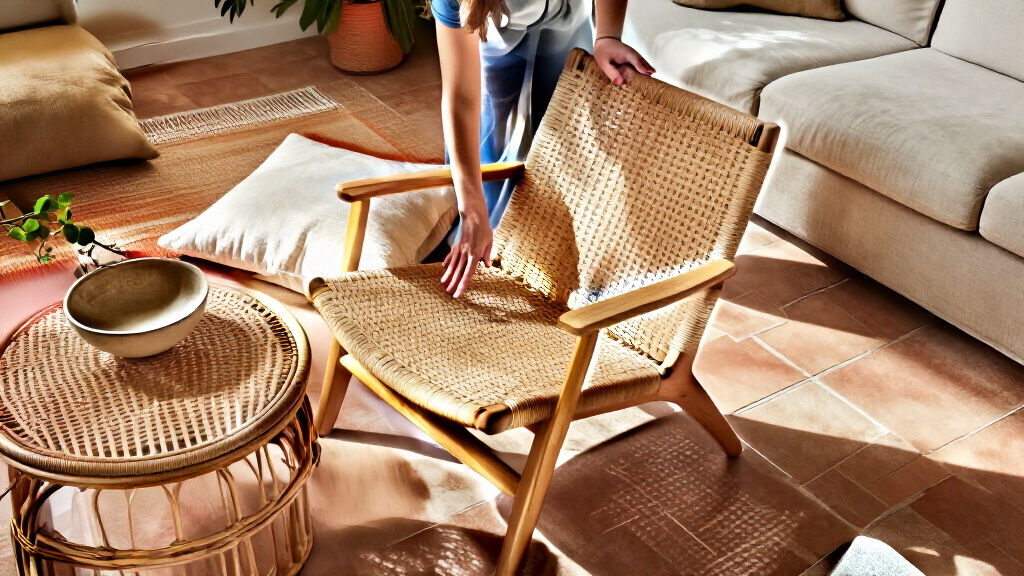
The roundup’s central design argument is that wicker is not limited to casual outdoor spaces. Its featured rooms place woven furniture alongside modern tables, fine art, patterned upholstery and architecture associated with different periods and regions. That range may help readers see wicker as a material that can be adapted to formal, urban or contemporary interiors, rather than as shorthand for a single coastal look.
For designers and homeowners, the examples also point to the role of pairing and setting: antique chairs can sit beside modern furniture, while traditional woven forms can take on new character through color, cushions and surrounding materials. The report illustrates those choices, but does not establish how widely they have influenced current purchasing or professional practice.
As an affiliate, we earn on qualifying purchases.
From Titanic Café to Modern Homes
The collection reaches back to the Titanic’s Café Parisien, then moves through private residences and hospitality spaces. Its historical examples include the Rome apartments of Galitzine and Agnelli, while later projects show designers using wicker in summer homes, sunrooms, poolhouses and island properties.
Veranda frames the rooms as a long-running design lineage rather than a single new launch or announcement. In its account, the material’s appeal comes from its ability to work with varied interiors: Agnelli’s wicker sits among art and lemon trees, while the Alabama sunroom pairs woven seating with printed upholstery. The article does not date every project or provide a full timeline for the material’s renewed visibility.
As an affiliate, we earn on qualifying purchases.
What the Roundup Does Not Establish
The phrase “cult status” is the roundup’s framing, not a quantified finding. The source provides selected rooms and design descriptions, but no survey, market data, sales figures or interviews establishing how many designers currently specify wicker or whether demand has increased.
The provided source material also ends partway through its description of the Cobblers Cove drawing room. It does not include the full account of that room or the tenth entry, so those details cannot be reported here. The article gives no publication date in the material supplied.
As an affiliate, we earn on qualifying purchases.
Further Details on the Featured Rooms
The source material identifies the featured designers, properties and several furniture choices, but it does not announce a forthcoming product, exhibition or industry milestone. Readers seeking the complete set of 10 rooms can consult Veranda’s original roundup for the full captions and images, including the entries not fully represented in the supplied text.
Any broader claim about wicker’s current popularity would require additional evidence, such as designer surveys, retail figures or reporting on recent projects. Until then, the roundup is best read as a curated set of examples showing how the material has been used across distinct interiors.
As an affiliate, we earn on qualifying purchases.
Key Questions
What is the news in this report?
Veranda published a roundup of 10 rooms featuring wicker in historic and contemporary interiors. It presents the rooms as examples of the material’s reach across different settings.
Which designers are named in the examples?
The supplied material names Renzo Mongiardino, Ward Bennett, Tom Scheerer, Amanda Lindroth, Celerie Kemble, Mark D. Sikes, Veere Grenney and Lulu Lytle, among others associated with the featured spaces.
Does the article prove that wicker is now a major design trend?
No. It offers a curated collection of rooms, but provides no market data or survey measuring wicker’s popularity among designers or consumers.
Where does the roundup show wicker being used?
The examples include a historic ship café, Rome apartments, a Maine summer home, an Alabama sunroom, a Nassau loggia, a Dominican Republic beach club, a Mustique dining pavilion and a Barbados hotel drawing room.
Source: rss