TL;DR
An Ideal Home report lists seven fruit trees suited to small gardens: pear, plum, fig, apple, mulberry, cherry and peach. Horticulture experts cited in the report recommend compact or dwarfing varieties, and say autumn can be a suitable time to plant while the soil remains warm.
Seven fruit trees can suit smaller gardens, according to a gardening report from Ideal Home, which recommends pear, plum, fig, apple, mulberry, cherry and peach varieties that can be kept compact or grown in containers. Experts quoted in the report say choosing dwarfing rootstocks and, where space is tight, self-fertile varieties can help gardeners grow fruit without an orchard or a second pollinating tree.
The report says autumn can be a good planting time because soil may still hold warmth from summer and seasonal rainfall can provide moisture as a tree establishes its roots. Pim Dickson, senior horticulturist at Fothergill’s, told Ideal Home that planting then allows plants to focus on root growth before the demands of spring and summer growth. Local weather and soil conditions still affect the best timing.
For pears, Julian Palphramand of British Garden Centres recommends ‘Concorde’ as a self-fertile option; he says ‘Doyenné du Comice’ is another choice where there is room for a pollinator. For plums, Harvst gardening and greenhouse expert Lucie Bradley recommends the self-fertile ‘Opal’ and ‘Victoria’. The report also notes that compact varieties can provide spring blossom as well as fruit.
Figs are described as suitable for pots because restricting their roots can help them crop, according to LBS Horticulture’s Richard Barker. Barker also suggests training figs flat against a wall. Apples can be grown in large pots or trained as cordons or espaliers, but many varieties need another tree for pollination; the report names ‘Braeburn’ and ‘Red Falstaff’ as self-fertile choices. For cherries, experts point to dwarf-rootstock trees and self-fertile varieties including ‘Stella’, ‘Lapins’ and ‘Sunburst’. The supplied article excerpt begins its peach advice by recommending dwarfing types trained against a warm, sunny wall, but ends before giving further details.
Fruit Growing Within Small Gardens
The guidance matters to readers with limited outdoor space because it offers ways to choose trees around their available footprint rather than assuming fruit growing requires a large plot. Pots, dwarfing rootstocks and training branches against walls can make some trees practical where a full-sized tree would not fit.
Pollination is another space-related issue. A self-fertile variety can produce fruit without a second tree of a compatible variety nearby, according to the experts quoted by Ideal Home. That does not mean every tree will crop reliably in every garden: conditions, pruning, pollination, weather and care all influence results. The report offers variety suggestions, not a guarantee of a harvest.

Designing a Fruit Tree Garden: How to Choose Fruit Trees That Thrive in Your Climate and Space (The Complete Fruit Tree Grower’s Collection)
As an affiliate, we earn on qualifying purchases.
As an affiliate, we earn on qualifying purchases.
Choosing Trees for Tight Spaces
The Ideal Home report draws on advice from horticulturalists and gardening specialists rather than presenting results from a comparative growing trial. Its central recommendation is to check a tree’s mature size and rootstock before buying. Palphramand says dwarfing rootstocks are bred to keep trees smaller, while Barker describes cordon and espalier training as ways to use a wall or narrow strip of ground.
The seven types differ in what they need. Figs can be grown in containers, while apples and peaches may be trained against walls. For apples in particular, the report warns that pollination needs vary by variety. It advises checking whether a chosen tree is self-fertile or needs a compatible pollinator, rather than assuming one apple tree will be enough.
For mulberries, Bradley distinguishes between planting a potted dwarf tree in early to mid-autumn and waiting until late autumn to plant a bare-root tree after it becomes dormant. The report also says pruning is part of care for pears and apples, though it does not provide a full planting or maintenance schedule for all seven types.
“Rainfall at this time of year provides more natural moisture, and this allows plants to concentrate on establishing their roots before the demands of spring and summer growth begin.”
— Pim Dickson, senior horticulturist at Fothergill’s
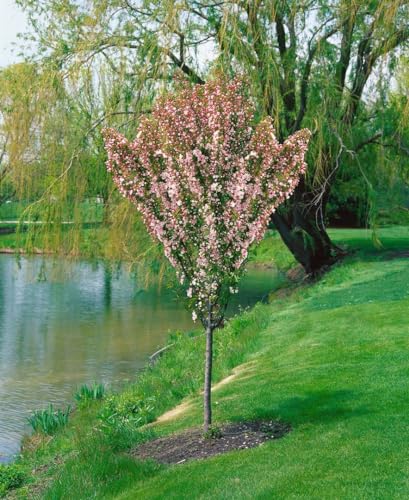
Apfelbaum 'Adirondack' 150-200 cm Topf Malus Obstbaum winterhart
- Type of Tree: Zierapfel mit essbaren Früchten
- Blossom Period: Weiße Blüten im Mai und Juni
- Fruit Description: Süß-säuerliche, essbare Früchte
As an affiliate, we earn on qualifying purchases.
As an affiliate, we earn on qualifying purchases.
Variety Needs and Peach Details
The report does not provide a complete growing guide, and the source material supplied here cuts off partway through its peach section. It therefore does not confirm which peach varieties are recommended or give further detail about their care. It also does not specify the mature dimensions of each named tree, local climate suitability or the pollination requirements of every variety. Gardeners should check those details with a nursery before buying. The article’s autumn planting advice is general; it does not establish that autumn is suitable in every location or weather condition.

Süßkirsche 'Stella Compact' 40 cm Prunus avium Obstbaum winterhart
- Self-fertile Cherry Tree: Produces dark red, sweet cherries
- Ideal for Containers: Suitable for pots and small spaces
- Compact Growth Habit: Round, dense crown, small size
As an affiliate, we earn on qualifying purchases.
As an affiliate, we earn on qualifying purchases.
Check Conditions Before Planting
Readers considering one of the trees can use the report’s recommendations as a starting point, then check the selected variety’s mature size, rootstock and pollination needs with a nursery or supplier. Before planting in autumn, they should also consider local temperatures, soil drainage and whether a tree will be grown in a pot or in the ground. The source provides no announced follow-up study or further milestone; the practical next step is matching a variety to the garden and its growing conditions.

Fruit Trees in Containers: How to Grow a Productive Orchard in Small Spaces
As an affiliate, we earn on qualifying purchases.
As an affiliate, we earn on qualifying purchases.
Key Questions
Which fruit trees does the report recommend for small gardens?
The seven types named by Ideal Home are pear, plum, fig, apple, mulberry, cherry and peach. The report recommends looking for compact or dwarfing varieties where space is limited.
Can I grow fruit trees in pots?
Yes, according to the experts quoted in the report. Figs are specifically described as suited to pots, and some apple and cherry varieties can also be grown in containers. Check the variety’s requirements and mature size before choosing a pot.
Do I need two fruit trees to get a crop?
Not always. Some varieties are self-fertile, meaning a second tree may not be needed for pollination. The report names examples such as pear ‘Concorde’, plum ‘Opal’ and ‘Victoria’, and cherry ‘Stella’. Many apples, however, need another tree for pollination, so check the chosen variety.
Why does the report suggest planting in autumn?
Horticulturist Pim Dickson says soil can remain warm after summer and rainfall can help provide moisture while roots establish. This is general advice rather than a guarantee that autumn planting will suit every location or weather condition.
Source: rss