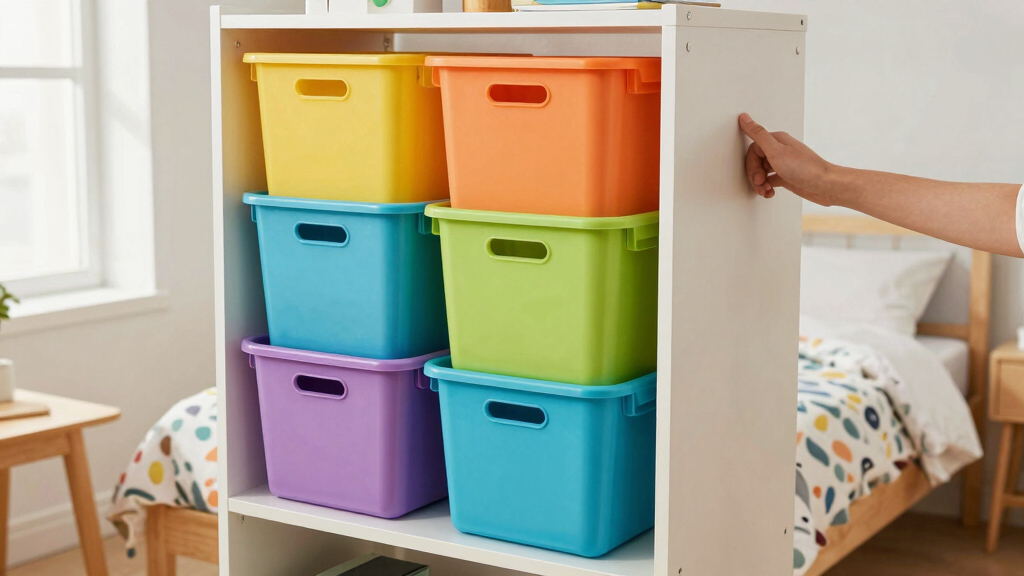
This comprehensive guide is designed for students looking to optimize their dorm room space through effective organization. Whether you’re a first-year student or someone seeking a more organized living area, this step-by-step process will help you select suitable storage bins, categorize your belongings, and arrange everything efficiently. By following these instructions, you will create a tidy, accessible, and clutter-free environment that maximizes your limited space, making your dorm room more comfortable and easier to maintain. The guide is tailored for beginners, requiring minimal tools and no prior experience in organization, ensuring a straightforward and achievable process within an hour or less.

Amazon Basics Collapsible Fabric Storage Cubes Organizer, 6-Pack, 10.5" x 10.5" x 11", Beige
- ✔ Quantity: 6
- ✔ Dimensions: 10.5" x 10.5" x 11"
- ✔ Color: Beige

YFXCVSL 4-Tier Plastic Storage Bins with Lid, 23QT, Stackable, with Wheels, Folding Storage Containers, Organizers for Living Roo…
- ✔ Capacity: 92QT
- ✔ Dimensions per tier: 15.35in x 11in x 8.27in
- ✔ Material: High-quality PP

Fordonral Pack of 3 Large Capacity Storage Bins Closet Organizer System
- ✔ Material: Cationic fabric
- ✔ Dimensions: 18.8 x 11 x 7.8 inches
- ✔ Quantity: 3
Difficulty: Beginner | Time: 30-60 minutes
What You’ll Need
Tools & Materials:
- Measuring tape
- Scissors or box cutter
- Labels or markers
Knowledge:
- Basic understanding of space management
- Ability to follow step-by-step instructions
Measure your room and available space before choosing bins. Have all tools ready to save time. Consider weight capacity for heavier items.

Amazon Basics zusammenklappbarer Aufbewahrungswürfel/Organizer aus Stoff mit Griffen, 26,6 x 26,6 x 27,9 cm, Einfarbig Beige, 6 Stück
- Set of 6 Storage Cubes: Organize home and office spaces
- Durable Breathable Fabric: Robust with attached handles
- Versatile Use: Open boxes or shelf inserts
As an affiliate, we earn on qualifying purchases.
Amazon Basics Collapsible Fabric Storage Cubes Organizer, 6-Pack, 10.5" x 10.5" x 11", Beige
<p>This set of six <strong>lightweight fabric cubes</strong> offers a flexible solution for small items, books, or accessories. Their <strong>collapsible design</strong> makes them easy to store when not in use, and the handles facilitate portability. Compared with the plastic options, these fabric cubes are less bulky but support only up to 5 lbs each, making them suitable for lighter items rather than heavy textbooks or bulky gear. They’re ideal for those who want a simple, adaptable storage solution that can be tucked away when not needed.</p>
Pros:
- Set of six provides ample organization options
- Collapsible for space-saving storage
- Handles make transport easy
- Lightweight yet durable fabric
Cons:
- Supports only up to 5 lbs, limiting heavier use
- Not designed for stacking in a rigid way without a compatible storage unit
Best for: Students seeking lightweight, flexible storage for clothes, accessories, or small household items.
Not ideal for: Heavy items or those needing rigid support, as support is limited to 5 lbs per cube.
Bottom line: A versatile, space-efficient choice for lightweight dorm room organization, best suited for smaller or less heavy items.
“A versatile, space-efficient choice for lightweight dorm room organization, best suited for smaller or less heavy items.”
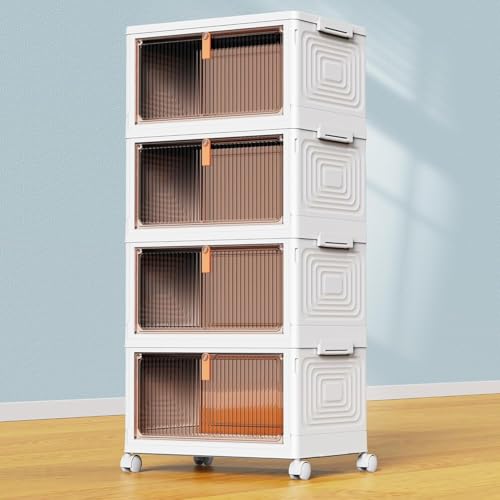
Aufbewahrungsbehälter aus Kunststoff mit 4 Etagen, 23 l, stapelbare Aufbewahrungsbehälter mit Rollen, faltbare Aufbewahrungsboxen, Schrank-Organizer und Aufbewahrung für Wohnzimmer, Küche, Büro,
- Large Capacity Storage: 92 QT total volume, 39x27.9x21 cm per tier
- Versatile Usage: Ideal for crafts, photos, makeup, and more
- Space-Saving Design: Stackable, foldable, no installation needed
As an affiliate, we earn on qualifying purchases.
YFXCVSL 4-Tier Plastic Storage Bins with Lid, 23QT, Stackable, with Wheels, Folding Storage Containers, Organizers for Living Roo…
<p>This <strong>4-tier plastic storage system</strong> provides a substantial 92QT capacity, making it ideal for bulky items like clothing, books, or craft supplies. Its <strong>stackable and foldable design</strong> helps maximize limited space, while the included wheels and locking mechanism enhance mobility and stability. Unlike the fabric cubes, this option is more rigid and can handle heavier loads, but its size and bulkiness might be a drawback in smaller dorm rooms. The dual opening options—top lid and front door—add convenience for quick access. It’s perfect for students who need maximum storage capacity and easy movement but are okay with some assembly and potential bulkiness.</p>
Pros:
- Massive 92QT capacity
- Foldable and stackable to save space
- Wheels with locking for easy mobility
- Dual opening for easy access
Cons:
- May be bulky and take up significant space when fully assembled
- Plastic material might be less sturdy than metal alternatives
- Assembly required, which could be time-consuming
Best for: Students with larger storage needs who want mobility and versatility, especially for bulky or heavy items.
Not ideal for: Small dorm rooms or those who prefer a lightweight, less bulky option; assembly may be a hassle for some.
Bottom line: The best choice for those needing large-capacity, mobile storage with flexible access, suitable for bigger items and spacious dorms.
“The best choice for those needing large-capacity, mobile storage with flexible access, suitable for bigger items and spacious dorms.”

Fordonral Faltbare Stoff-Aufbewahrungskörbe, stabiler Kleider-Organizer, Schrank-Organizer, Regalkörbe, große Aufbewahrungsboxen für Kleidung, Jeans, Spielzeug, Bücher, 3 Stück
- Material: Hochwertiger, langlebiger Stoff
- Maße: 47.8 x 27.9 x 19.8 cm
- Vielseitige Nutzung: Organisiert Kleidung, Spielzeug, Bücher
As an affiliate, we earn on qualifying purchases.
Fordonral Pack of 3 Large Capacity Storage Bins Closet Organizer System
<p>This <strong>set of three large fabric bins</strong> combines durability with aesthetic appeal, made from high-quality cationic fabric. They are <strong>foldable and versatile</strong>, suitable for clothing, toys, or household items. Their neutral design makes them adaptable to various decor styles, and their sturdy construction ensures they hold up over time. Compared to the plastic options, these fabric bins are more flexible and softer, but may wear over extended use or heavy loads. They’re ideal for students who prioritize durable, stylish, and multi-purpose storage solutions that blend seamlessly into their room decor.</p>
Pros:
- Durable, high-quality fabric construction
- Versatile for multiple storage needs
- Foldable and space-efficient
- Neutral aesthetic complements various decor styles
Cons:
- Fabric may wear with extended heavy use
- Limited color options
Best for: Students looking for durable, stylish fabric bins that can handle various household items with long-term use.
Not ideal for: Heavy or bulky items that could cause fabric wear, or those preferring rigid, stackable containers.
Bottom line: A durable, stylish fabric bin set perfect for long-term organization in dorms that value aesthetics and versatility.
“A durable, stylish fabric bin set perfect for long-term organization in dorms that value aesthetics and versatility.”
As an Amazon Associate we earn from qualifying purchases.
Before You Start
Clear a large surface area to work on. Remove items from the space you plan to organize. Make sure to check dorm rules about storage and avoid overloading bins.
Step-by-Step Instructions
Step 1: Assess your storage needs
List the categories of items you need to store, such as clothes, toiletries, school supplies, and snacks.
Estimate the volume for each category to determine bin sizes.
Tip: Write down your list to ensure you select enough bins and appropriate sizes.
Check: You have a clear list of item categories and approximate storage volume for each.
Step 2: Measure available space
Use a measuring tape to record the dimensions of shelves, under-bed areas, closet space, and available floor space.
Note these measurements for selecting the right bin sizes.
Tip: Double-check measurements before shopping for bins to avoid buying too large or small options.
Check: You have accurate measurements of all potential storage areas.
Step 3: Choose appropriate storage bins
Select bins that fit your measurements, are durable, and have lids if needed for stacking or protecting items.
Opt for clear bins for visibility or label opaque ones for easier identification.
Tip: Avoid bins that are too small, which can cause overcrowding, or too large, which waste space.
Check: You have a set of bins that fit your space and storage needs.
Step 4: Sort items into categories
Group similar items together, such as all toiletries, school supplies, or clothes, before placing them into bins.
Tip: Use small containers or dividers inside bins for tiny items to prevent mixing.
Check: Items are organized by category and ready to be packed into bins.
Step 5: Pack items into bins systematically
Place items into bins based on their categories, filling them efficiently without overstuffing.
Use the heaviest items at the bottom of each bin for stability.
Tip: Leave some space at the top of each bin for easy handling and to prevent items from spilling.
Check: All items are packed neatly, and bins close securely without forced compression.
Step 6: Label each bin
Use labels or markers to clearly identify contents of each bin, such as ‘Clothes,’ ‘School Supplies,’ or ‘Snacks.’
Attach labels to the front or lid of each bin for easy access.
Tip: Use waterproof or laminated labels if you plan to handle moisture or spills.
Check: All bins are labeled accurately and are easy to identify at a glance.
Step 7: Arrange bins within your space
Place bins in designated areas based on your measurements, stacking or lining them up to maximize space.
Keep frequently used items accessible, and store seasonal or less-used items higher or in less accessible spots.
Tip: Avoid stacking too high to prevent tipping or damage. Use shelf dividers if available.
Check: All bins are organized logically, with clear access to daily-use items.
Common Mistakes to Avoid
- Choosing bins that are too small or too large for the items. — Measure your items and spaces carefully, and select bins that fit comfortably without wasting space.
- Overpacking bins, causing difficulty closing or damaging the containers. — Leave some space at the top of each bin for easy handling and to prevent damage.
- Not labeling bins, leading to confusion and wasted time searching. — Label each bin clearly immediately after packing.
- Stacking bins too high or unevenly, risking tipping or damage. — Stack only as high as stability allows, and use shelf dividers if possible.
Troubleshooting
Problem: Bins don’t fit in the designated space.
Solution: Re-measure your space and select smaller or differently shaped bins accordingly.
Problem: Items are difficult to access after organization.
Solution: Rearrange bins to make frequently used items more accessible and ensure labels are visible.
Problem: Bins are too heavy or awkward to move.
Solution: Distribute weight evenly, pack heavier items at the bottom, and choose lighter containers when possible.
What Success Looks Like
All items are stored neatly within labeled bins, which fit within your space without overcrowding. You can quickly find and access items, and the space looks tidy and organized.
Next Steps
Regularly review your organization system, re-label as needed, and adjust bin placement for seasonal changes. Keep the space tidy by returning items to bins after use. Consider adding more bins or reorganizing if you acquire new items.
Frequently Asked Questions
How many bins do I need for a small dorm room?
Typically, 4 to 8 bins are sufficient, depending on your storage needs and room size. Focus on categorizing items first to determine quantity.
What type of bins are best for stacking?
Choose sturdy, uniform-sized bins with lids designed for stacking. Clear bins or labeled opaque bins improve visibility.
Can I reuse containers from other purposes?
Yes, use containers from home, but ensure they are clean, sturdy, and suitable for the items you plan to store.
How often should I reorganize my dorm storage?
Revisit your setup every few months or when you acquire new items to maintain an efficient and tidy space.