
TL;DR
A Livingetc report features Norwegian designer Gudbjørg Simonsen’s advice for lighting homes during short winter days. She recommends designing for seasonal change, using varied light rather than uniformly bright rooms, and combining practical lighting with softer sources to create atmosphere.
Norwegian designer Gudbjørg Simonsen has shared advice for lighting homes during the short days of winter, in a Livingetc report about how seasonal darkness can shape interior design. Her approach favors layered, varied light and rooms designed to change with the seasons, rather than brightening every corner uniformly.
Simonsen, whose work is based in Stavanger, told Livingetc that a home’s lighting should respond to changing daylight throughout the year. She said she does not think homes should be designed as if light stays constant, or that the goal should be to fight darkness. Instead, she said, light, shadow, color and materials should be allowed to take on different qualities as the seasons change.
One recommendation is to avoid making every part of a room equally bright. Simonsen said she values variation, drawing on the shifts between brighter areas, softer transitions and shadow found in nature. In her view, an evenly lit room can feel flat; darker areas do not always need to be eliminated.
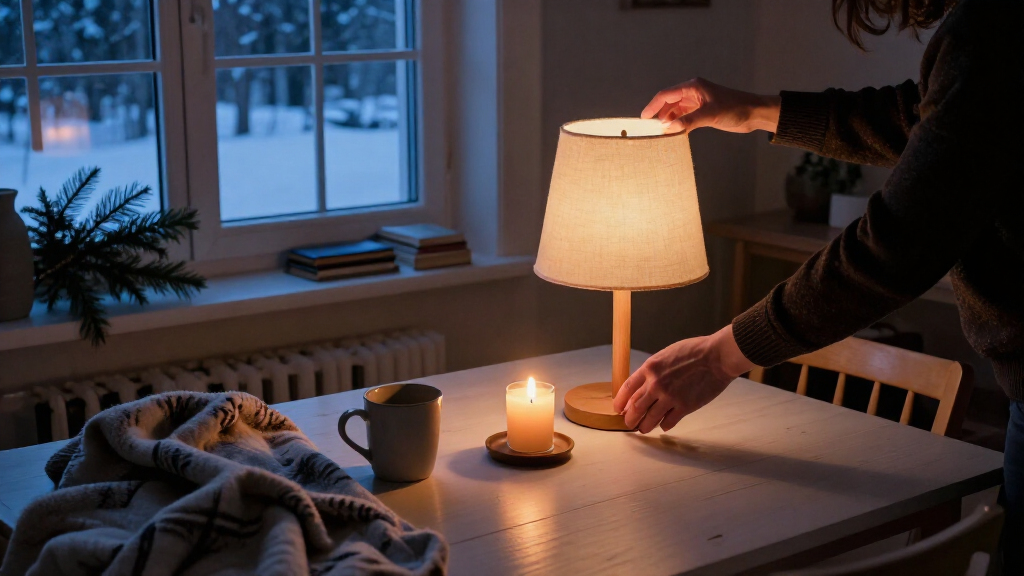
She also recommends using different kinds of lighting for different purposes. Task lighting can provide focused illumination over a work surface or help guide movement through a room, while concealed or integrated fittings can keep the source discreet. The report introduces layering as a way to combine practical lighting with decorative and atmospheric sources, though the available source text does not include the full set of recommendations in that section.
Lighting for More Than Visibility
The advice treats home lighting as both a practical and an emotional part of daily life during dark months. Simonsen distinguishes between light that helps people see and light that affects how a space feels. A well-planned room, in this account, is not simply brighter: it can create intimacy, depth and warmth through contrast and carefully placed light.
That distinction may help readers think beyond adding a stronger ceiling light when daylight is limited. The report suggests considering how people use a room, where focused illumination is needed, and where softer light can make a space feel welcoming. Simonsen also describes a warmly lit window as a sign of human presence on a dark evening, linking lighting to a sense of home and connection.
Her recommendations are design guidance, not medical advice or evidence that a particular lighting arrangement will improve mood for everyone. The source presents Simonsen’s professional perspective and does not cite research measuring the effects of these techniques.
As an affiliate, we earn on qualifying purchases.
Norway’s Seasonal Light
The Livingetc report frames the advice around Norway’s sharp seasonal changes. It says that in December parts of the country can receive up to six hours of daylight a day, while the northernmost areas can have no daylight during the winter period described by the article. The figures are presented as broad context; the source does not specify a particular location, date range or measurement method.
Simonsen told the publication that climate and geography inform her design work, alongside the needs and lifestyle of each client. The report also describes her interest in traditional Norwegian architecture. Rather than treating winter darkness only as a problem to correct, her approach allows a home’s atmosphere to shift as daylight and seasons change.
“I don’t think we can design homes as though light remains constant throughout the year. Nor do I think the answer is to fight the darkness.”
— Gudbjørg Simonsen, Norwegian designer, speaking to Livingetc
adjustable task and ambient lighting
As an affiliate, we earn on qualifying purchases.
As an affiliate, we earn on qualifying purchases.
Limits of the Published Advice
The source excerpt ends partway through its discussion of layered lighting, so it does not provide all of Simonsen’s specific recommendations or the full list of techniques covered by the article. It also does not give detailed product specifications, brightness levels or room-by-room plans.
The daylight figures are not broken down by specific Norwegian cities or dates, and the report does not cite independent studies about lighting’s effects on mood. The advice should be understood as one designer’s approach, rather than a universal standard or a guarantee of a particular result.
As an affiliate, we earn on qualifying purchases.
Applying the Ideas at Home
The report offers design principles rather than a prescribed next step: consider how daylight changes in a room, identify where focused light is useful, and add softer sources where atmosphere matters. Readers can assess the tasks and routines in each space before deciding whether a new fitting or a different lighting arrangement is needed.
Livingetc’s article may provide further guidance beyond the supplied excerpt, but the source material here does not establish what additional advice or products it includes. Simonsen’s core message remains to plan for seasonal variation and use light to support both visibility and the feeling of a lived-in home.
As an affiliate, we earn on qualifying purchases.
Key Questions
What is Gudbjørg Simonsen’s main advice for winter lighting?
She recommends planning for seasonal changes and using varied, layered lighting, rather than trying to make every part of a room equally bright.
Why does she advise against evenly lighting a whole room?
Simonsen says uniform illumination can make a room feel flat. She prefers the contrast of brighter areas, softer transitions and shadow, similar to natural light.
What does layered lighting mean in the report?
It means using different light sources for different needs. The article excerpt mentions task lighting for work surfaces or movement through a space, alongside decorative and atmospheric lighting.
How much daylight does Norway get in December?
The Livingetc report says some parts of Norway can receive up to six hours a day, while the country’s northernmost areas can have no daylight during the winter period described. It does not specify exact dates or locations for those figures.
Source: rss