TL;DR
A House Beautiful report outlines five designer strategies for making coordinated rooms feel more personal: mix wood tones, give a kitchen island a distinct look, vary dining chairs, combine artwork styles and use different fixture finishes. The advice focuses on keeping a room cohesive through selective repetition rather than matching every item.
House Beautiful has published five designer tips for loosening up rooms where furniture, finishes or accessories match closely. The report recommends mixing materials and styles while repeating a few details to keep a room cohesive without making every element identical.
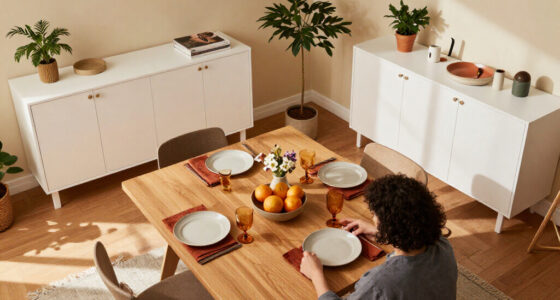
The suggestions come from designers and decorators quoted in the report. For wood, Leah Hook, founder and principal designer at Gray Oak Studio, says she likes combining dark and light tones. A room can still feel connected by repeating one wood tone in a smaller feature, such as an art frame or tray, rather than using it on every surface.
For kitchens, Gaelle Dudley, founder and creative director at GLDESIGN, recommends making the island a point of contrast. That could mean choosing a different stone from the perimeter counters or using a thicker edge; Dudley cites a two-inch mitered profile as one option, compared with a standard 1.25-inch thickness.
The remaining ideas address dining rooms, art and hardware. Pattie Kelly of Inspired Home Interiors suggests pairing dining chairs from different collections while repeating one feature across them. The report also encourages mixing artwork and frame materials, with a consistent detail such as mat size to help the arrangement feel intentional. In a room’s fixtures, brass and matte black can be combined instead of repeating one finish throughout.
How Contrast Changes a Room
The advice matters to homeowners who want coordinated interiors to feel less like a complete furniture set and more reflective of individual taste. The designers’ approach is not to abandon coordination altogether, but to use contrast selectively: vary a material or style, then repeat a detail that links the pieces.
That distinction gives readers practical ways to refresh a room without replacing everything. Some suggestions, such as changing chairs or rearranging art, can be explored with existing or secondhand items. Altering a kitchen island’s stone or thickness is a larger renovation decision and may involve cost, installation and compatibility with the existing cabinetry and counters.
Products Worth Considering

Extra große, robuste Umzugstaschen, transparente Aufbewahrungsbehälter mit Deckel, verstärkte Griffe und robuste Reißverschlüsse, Umzugskartons, Aufbewahrungsbeutel für Kleidung, Schlafsäle
Extra groß: Mit den Maßen 68,1 cm L x 38,1 cm B x 34,9 cm H bieten ukeetap…

WOWBOX 25-teiliges transparentes Kunststoff-Schubladen-Organizer-Set, 4 Größen, Schreibtisch-Schubladen-Trenner, Organizer und Aufbewahrungsbehälter für Make-up, Schmuck, Badezimmer, Büro
Hochwertiges Material: Der Schubladen-Organizer ist aus ungiftigem Kunststoff, der sicher verwendet werden kann. Das transparente Design macht es…

MIULEE Cremeweiße Halloween-Kissenbezüge, niedliches Geister-Dekor, 40,6 x | Weiches Plüsch-Kunstfell, gruselige Dekoration, Herbst-Dekokissen für Couch, Sofa, Bett, Veranda, Wohnzimmer
3D-besticktes gruseliges Design: Verschönern Sie Ihre Einrichtung mit diesen einzigartigen Geister-Kissenbezügen. Auf einer weichen, cremefarbenen Basis, mit taktilen…
As an affiliate, we earn on qualifying purchases.
The Five Design Moves
The report frames the problem as a room in which nearly everything comes from the same set. Preeti Shah, founder and principal designer at Spotlight Style, says a home can look sterile when all its furnishings come from one set. That is her professional assessment, not a measured finding or a claim that coordinated rooms always look unappealing.
Across the five tips, the shared principle is to preserve some visual connection while introducing variation. Wood tones can differ while a smaller accessory echoes one of them; chairs can come from separate lines while sharing one feature; art can contrast in style while using similar mats or frame widths. For kitchen materials and hardware, the report gives examples rather than prescribing a single palette or design rule.
“A home often looks sterile when everything comes from the same set.”
— Preeti Shah, founder and principal designer at Spotlight Style
Advice, Not a Design Formula
The source presents these ideas as designer guidance, not as tested rules or guarantees that a room will look better or cost more. It provides no survey data, pricing, or comparisons of how homeowners respond to mixed versus matching interiors. Terms such as “sterile” and “more expensive” reflect design judgments in the report, not quantified outcomes.
It is also not clear how well each suggestion will suit a particular room. Chair height, available space and clearance behind dining chairs matter, the report says. Island stone changes depend on the kitchen and project scope, while the right balance of contrasting finishes or artwork will vary with the existing space.
Applying the Ideas at Home
The report does not announce a product launch, renovation program or follow-up study. Its next step for readers is practical: identify one area that feels overly coordinated, introduce a contrasting material or style, and repeat a small detail to bring the composition together.
For a lower-commitment change, homeowners could test different chair pairings, move or regroup artwork, or add an accessory in a wood tone already present elsewhere. Larger changes, such as replacing an island surface, call for project-specific planning and professional installation advice. The source offers no cost estimates or timeline for such work.
Key Questions
What are the five ways to break up a matchy interior?
The report recommends mixing wood tones, giving a kitchen island a distinct look, combining dining chairs from different collections, mixing artwork styles and varying fixture finishes.
How can different items still look coordinated?
Repeat a limited detail across contrasting pieces. Examples in the report include echoing a wood tone in an accessory, repeating one feature across dining chairs, or keeping artwork mats or frame widths consistent.
Can dining chairs be different heights or styles?
Kelly recommends considering chair height so the chairs work at the table, along with the space needed to pull them out. The report supports mixing styles but does not suggest ignoring fit or clearance.
Does the report say mixed finishes make a home more valuable?
No. It presents designer views that varied finishes can add depth and visual interest, and says minimal matching of shiny finishes may make a space look more expensive. It provides no property-value data or measured financial benefit.
Source: housebeautiful.com